1.5 ATA vs 2.0 ATA Hyperbaric Chambers: What Actually Changes?
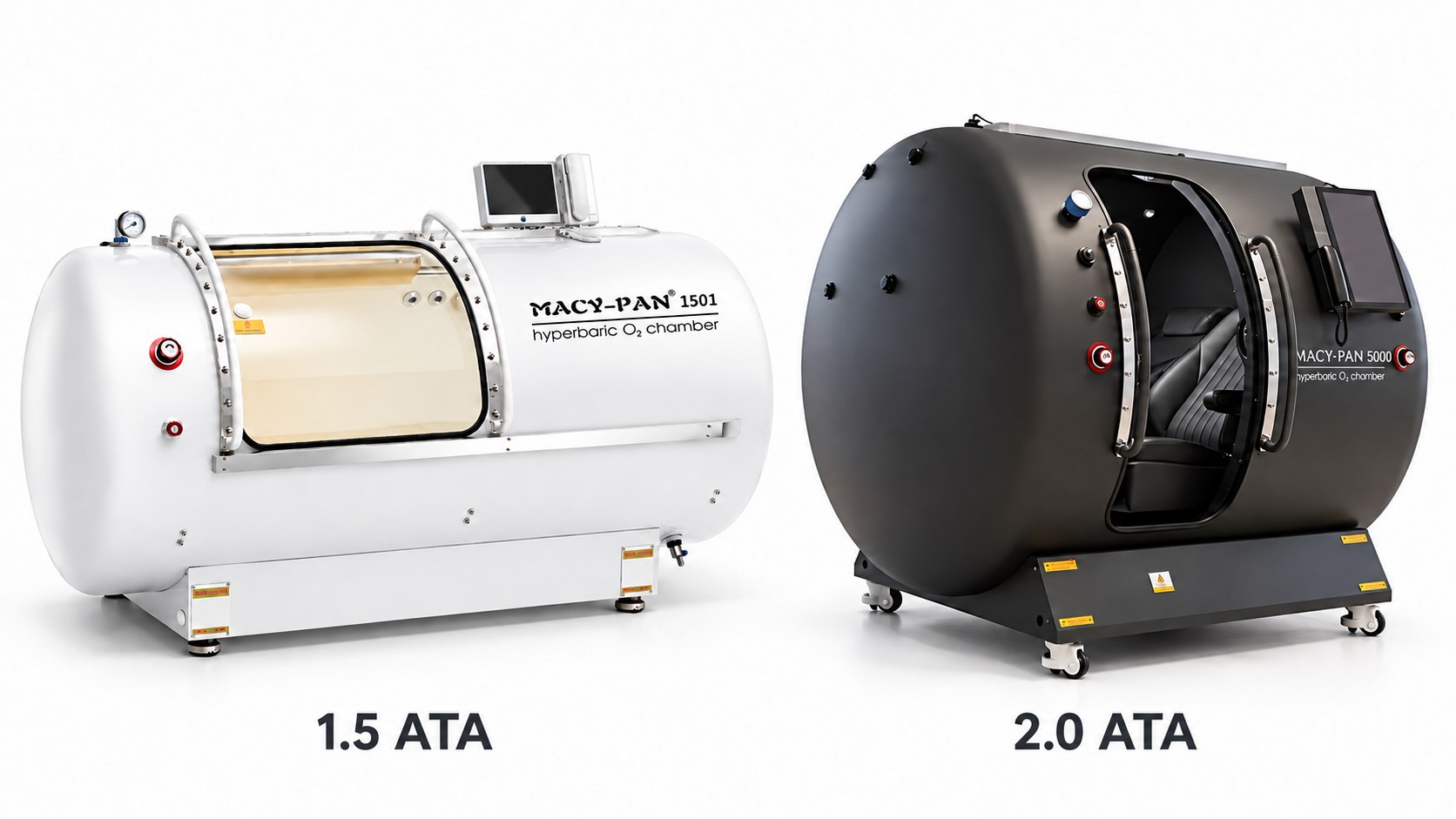
The main difference between 1.5 ATA and 2.0 ATA hyperbaric chambers is the pressure capability. A 2.0 ATA chamber is designed to support a higher pressure level than a 1.5 ATA chamber, but a higher ATA rating does not by itself mean a better chamber or a better choice for every project.
If your required operating pressure has not yet been confirmed, review How to Choose the Right Operating Pressure for a Hyperbaric Chamber before comparing specific chamber configurations.
For buyers, the comparison should go beyond the ATA number. The working-pressure range, chamber type, user capacity, pressure-control system, oxygen-delivery configuration, supporting equipment and technical documentation should all be reviewed for the exact model being considered.
| What Buyers Should Compare | 1.5 ATA Chamber | 2.0 ATA Chamber | What Buyers Should Verify |
| Pressure capability | Supports operation up to the specified 1.5 ATA configuration | Supports operation up to the specified 2.0 ATA configuration | Exact model pressure specification |
| Standard working pressure | Model-specific | Model-specific | Confirm the stated working pressure rather than relying only on the maximum ATA |
| Adjustable pressure range | Depends on model and control configuration | Depends on model and control configuration | Available adjustment range and operating limits |
| Pressure control | Model-specific control functions | Model-specific control functions | Pressurization, pressure holding, depressurization, monitoring and related controls |
| Oxygen delivery | Must be confirmed separately | Must be confirmed separately | Oxygen-delivery method and configuration; do not infer it from ATA alone |
| Chamber configuration | Depends on the selected model | Depends on the selected model | Chamber design, dimensions, interior and supporting systems |
| User capacity | May vary by model | May vary by model | Monoplace or multiplace requirements and users per session |
| Room & installation | Project-specific | Project-specific | Chamber dimensions, delivery access, utilities and site conditions |
| Technical documents | Should match the exact 1.5 ATA model/configuration | Should match the exact 2.0 ATA model/configuration | Specifications, manuals and applicable model-specific documents |
| Quotation scope | Depends on the complete system supplied | Depends on the complete system supplied | Chamber, supporting equipment, customization, documents and project support |
The key point is that ATA should not be used as a shortcut for judging chamber type, user capacity or complete system configuration. A 1.5 ATA chamber is not automatically a monoplace chamber, and a 2.0 ATA chamber is not automatically a multiplace chamber. These are separate purchasing decisions that must be matched to the project requirements and the specifications of the selected model.
When comparing quotations, buyers should therefore ask a more specific question than simply “Is this chamber 1.5 ATA or 2.0 ATA?” The better questions are: What is the standard working pressure? What range can the selected model operate within? What pressure-control and oxygen-delivery configuration is included? And which technical documents support the quoted pressure capability?
 Does 1.5 ATA or 2.0 ATA Determine the Right Chamber Type?
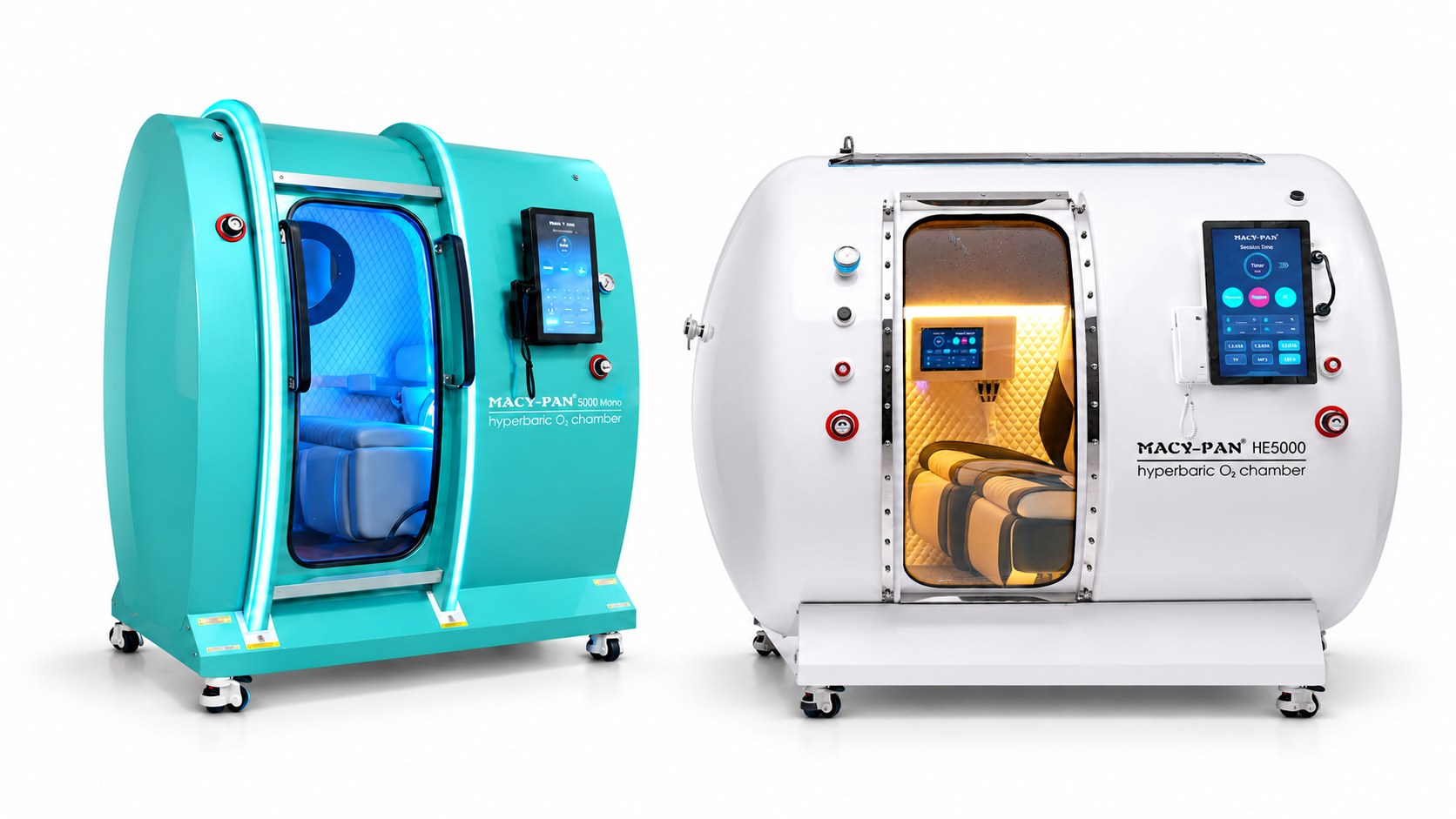
Not by itself. Operating pressure, types of Hyperbaric Chambers and user capacity are separate factors in hyperbaric chamber selection. A 1.5 ATA requirement does not automatically mean a monoplace chamber, and a 2.0 ATA requirement does not automatically mean a multiplace chamber.
Buyers should evaluate these three requirements separately:
● Operating pressure: What working pressure and pressure range does the project require?
● Chamber type: Does the project require a monoplace or multiplace chamber configuration?
● User capacity: How many users need to use the chamber per session?
Monoplace Hyperbaric Chambers
A monoplace hyperbaric chamber is designed around individual use. When comparing 1.5 ATA and 2.0 ATA options, buyers should confirm whether the selected monoplace model supports the required working pressure, available pressure range and system configuration.
The decision should also consider room space, user access, chamber dimensions, operating workflow and supporting equipment, rather than pressure alone.
Multiplace Hyperbaric Chambers
A multiplace hyperbaric chamber is designed to accommodate multiple users according to the capacity and interior configuration of the selected model. Its main purchasing considerations include users per session, seating or bed layout, internal space, operating workflow and oxygen-delivery configuration.
A multiplace design should not be assumed to require a higher operating pressure simply because it accommodates more users. Buyers should verify the pressure capability and operating limits of the exact model separately.
Compare Pressure, Chamber Type and Capacity Together
Before selecting a chamber, buyers should answer these questions together:
● How many users are expected per session?
● What working pressure is required for the project?
● Is a monoplace or multiplace configuration more suitable for the planned operation?
● How much room space is available?
● What interior layout is required?
● How will oxygen be delivered to the user or users?
● Which chamber model supports the required pressure, capacity and configuration?
The practical selection process is therefore not “1.5 ATA = monoplace” or “2.0 ATA = multiplace.” Buyers should first define the required pressure, chamber type and user capacity, then identify the specific model that supports those requirements.
For a more detailed comparison of chamber designs and capacity, see Monoplace vs Multiplace Hyperbaric Chambers.
 What Changes in the Chamber System When Pressure Requirements Change?
When comparing 1.5 ATA and 2.0 ATA hyperbaric chambers, buyers should look beyond the pressure rating and review how the selected chamber is designed, controlled and configured for the quoted working-pressure range.
A different pressure requirement does not automatically mean that every system component will be different. The actual chamber design, control functions, oxygen-delivery method and supporting equipment depend on the specific model and configuration. These should be confirmed before comparing quotations or placing an order.
Chamber Design
Confirm that the selected chamber model is designed for the quoted working-pressure range and that the pressure capability applies to the exact configuration being offered.
Buyers should review the chamber specification together with its dimensions, door and window configuration, interior layout and other model-specific design details rather than assuming that a model name or chamber appearance indicates its pressure capability.
Pressure Control
The pressure rating alone does not explain how pressure is managed during operation. Buyers comparing 1.5 ATA and 2.0 ATA configurations should verify the pressure-control functions provided with each model.
Depending on the selected chamber and control system, the points to confirm may include:
● Controlled pressurization and depressurization
● Automatic pressure holding
● Available adjustable pressure range
● Real-time pressure display
● Pressure-related alarms
● Emergency pressure-release functions
● Operator controls and pressure-setting permissions
The available functions and operating limits should be confirmed in the applicable model specifications and operating documents.
 Oxygen Delivery
Chamber pressure and oxygen delivery should be evaluated separately. A higher ATA rating does not by itself define the oxygen concentration, oxygen-delivery method or complete oxygen-supply configuration.
Buyers should confirm how oxygen is supplied for the selected chamber, what oxygen-delivery interface is provided and, for multiplace configurations, how oxygen delivery is arranged for each occupant.
This is especially important when comparing two quotations that show different ATA ratings but may also include different oxygen-supply configurations.
Supporting Equipment
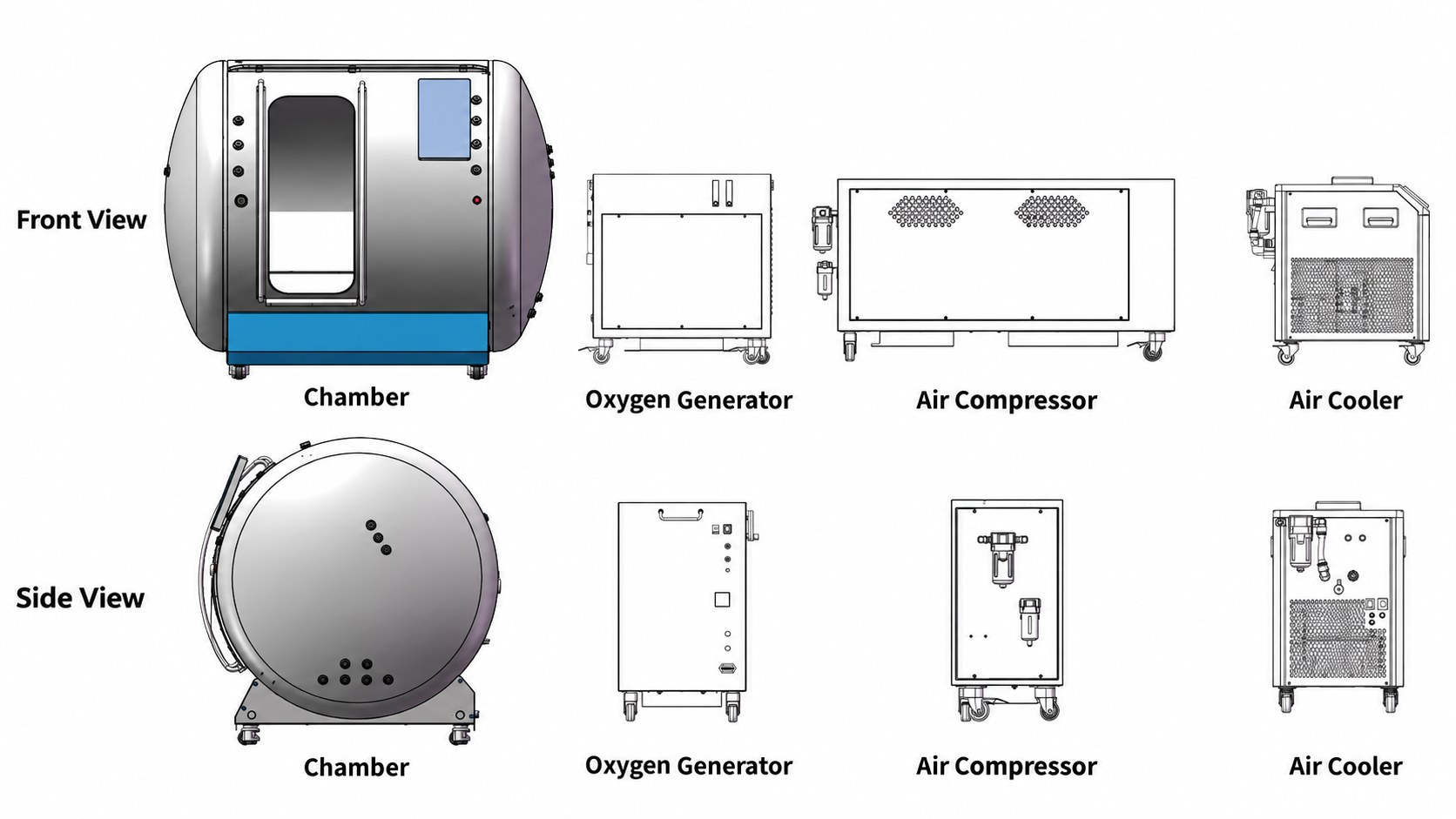
A hyperbaric chamber operates as part of a complete system. When comparing 1.5 ATA and 2.0 ATA options, buyers should review the supporting equipment included with the exact chamber configuration.
Depending on the model, the system may include:
● Air compressor
● Oxygen supply equipment
● Air-conditioning system
● Control system
● Pressure monitoring components
● Other model-specific supporting equipment
Buyers should not assume that a 2.0 ATA quotation automatically includes a particular equipment configuration, or that every 1.5 ATA system uses the same supporting equipment. The complete system scope should be verified model by model.
To compare the equipment supplied with each pressure configuration, review what is included in a complete hyperbaric chamber system and confirm the system scope for the selected model.
The most useful comparison is therefore not simply 1.5 ATA versus 2.0 ATA, but whether the complete chamber system is designed, configured and verified for the required operating conditions.
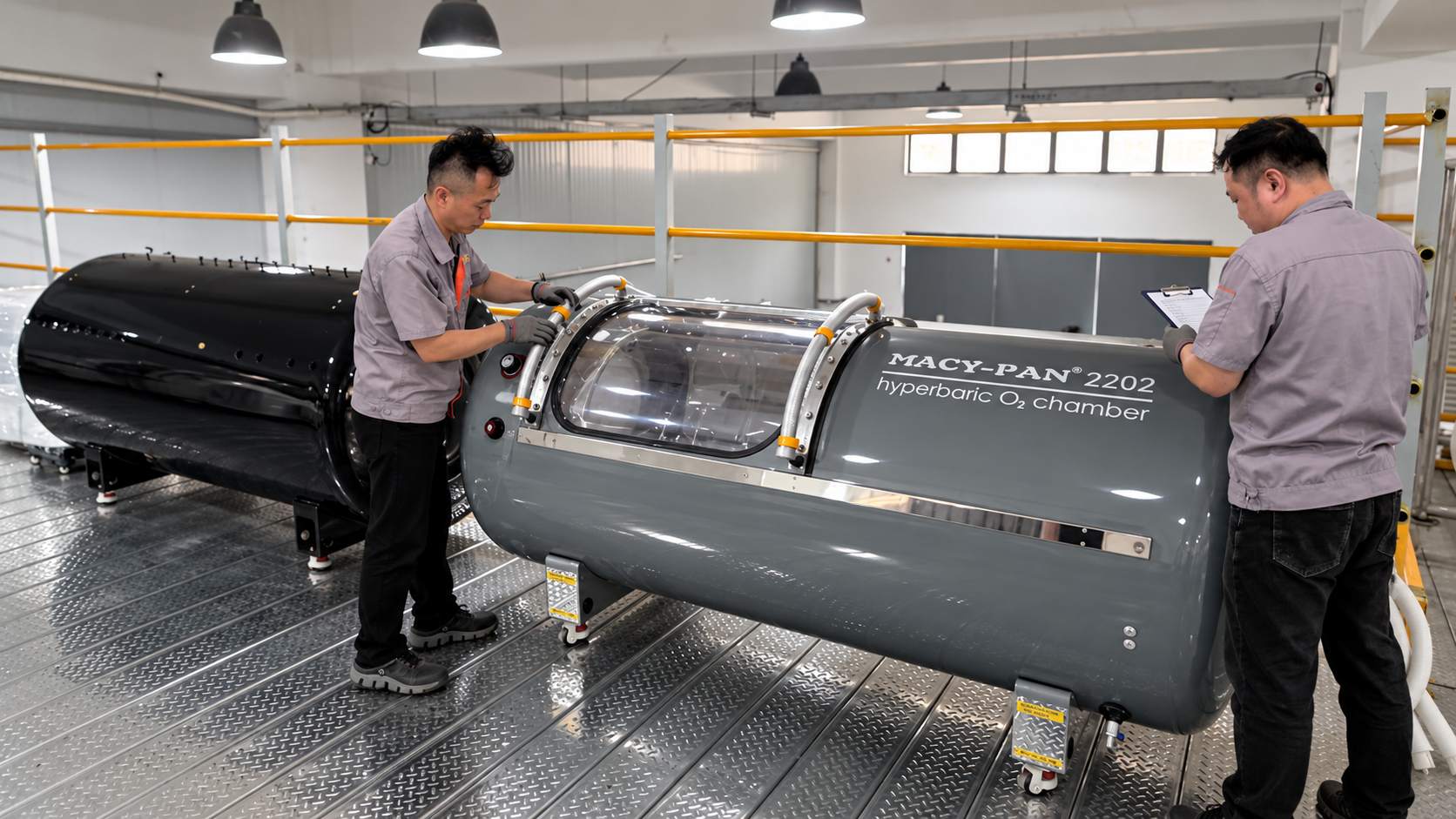
To understand how MACY-PAN chambers are assembled, pressure-checked and functionally tested before delivery, review the Hyperbaric Chamber Manufacturing and Testing Process.
What Should Buyers Compare Beyond the ATA Rating?
When comparing 1.5 ATA and 2.0 ATA hyperbaric chambers, pressure should be only one part of the purchasing decision. Two chambers with different ATA ratings may also differ in user capacity, system configuration, room requirements, supporting equipment, documentation and the complete scope of supply.
Instead of comparing only the pressure rating or quoted chamber price, buyers should evaluate the complete project requirements.
Use this buyer checklist when comparing chamber options and quotations:
1. Project Requirements
Confirm the intended application and required operating pressure before comparing models. The selected chamber should support the defined working-pressure range and project requirements rather than simply offer the highest available ATA.
2. User Capacity
Determine how many users are expected per session and how the chamber will fit into the planned daily workflow. This helps define whether a monoplace or multiplace configuration is required independently of the pressure rating.
3. Room and Delivery Access
Check the chamber dimensions against the available room space and proposed installation position. Doorways, corridors, lifts and other delivery access points should also be reviewed before the model is confirmed.
Buyers comparing models can review hyperbaric chamber dimensions to check internal space, external size and facility fit before confirming a chamber.
For a broader facility-planning checklist, see Commercial Hyperbaric Chamber: What Facilities Need to Plan Before Installation.
4. Installation Requirements
Confirm the required utilities, site preparation, local installation work and responsibilities before delivery. Buyers should also understand which installation services are included and which arrangements must be completed locally.
Review Hyperbaric Oxygen Chamber Installation Support when planning site preparation and installation responsibilities.
5. Model-Specific Documentation
The quoted 1.5 ATA or 2.0 ATA capability should be supported by documentation for the exact chamber model and configuration. Review the applicable product specifications, operating manual, pressure-related records and other available technical documents rather than relying only on a general product description.
Before ordering, verify that the supporting documents apply to the exact chamber model and pressure configuration. See how to verify hyperbaric chamber certification documents before ordering for the key checks buyers should complete.
6. Complete Quotation Scope
Do not compare quotations by chamber price alone. Confirm what each quotation actually includes, such as the chamber, supporting systems, customization, applicable documents, packaging, delivery terms, installation support and after-sales support.
For a more detailed quotation comparison, see How Much Does a Hyperbaric Chamber Cost? What Buyers Should Compare Beyond the Price.
A meaningful 1.5 ATA vs 2.0 ATA comparison should therefore move from “Which chamber has the higher pressure?” to “Which complete chamber configuration and project scope matches the confirmed requirements?”
1.5 ATA vs 2.0 ATA Hyperbaric Chamber FAQs
Is a 2.0 ATA Hyperbaric Chamber Better Than a 1.5 ATA Chamber?
Not necessarily. A higher ATA rating indicates a higher pressure capability, but it does not by itself determine chamber quality or whether a model is more suitable for a particular project. Buyers should match the required operating pressure with the appropriate chamber model and system configuration.
Can Both Monoplace and Multiplace Chambers Support 1.5 ATA or 2.0 ATA?
Pressure capability should be verified for the exact chamber model rather than assumed from whether the chamber is monoplace or multiplace. Chamber type, user capacity and operating pressure are separate selection factors.
Is a 2.0 ATA Chamber Always Larger Than a 1.5 ATA Chamber?
No. Chamber size is determined by the specific chamber design, user capacity and model configuration. The ATA rating alone does not determine the physical dimensions of a hyperbaric chamber.
Does 2.0 ATA Mean a Higher Oxygen Concentration Than 1.5 ATA?
Not by itself. ATA describes the absolute pressure inside the chamber. Buyers should separately verify the oxygen concentration, oxygen-delivery method and oxygen-supply configuration for the selected model.
Can the Pressure Be Adjusted Between 1.5 ATA and 2.0 ATA?
It depends on the specific chamber model and control configuration. Buyers should verify the standard working pressure, available adjustable range, pressure-setting method and operating limits in the applicable model-specific documentation.
Does a 2.0 ATA Hyperbaric Chamber Cost More Than a 1.5 ATA Chamber?
No. The ATA rating alone is not enough to determine the final price. Cost can also depend on chamber type, capacity, dimensions, system configuration, supporting equipment, customization, documentation, delivery and installation-support scope. See How Much Does a Hyperbaric Chamber Cost? for a detailed explanation of chamber pricing and quotation factors.
Which Information Should I Provide When Requesting a 1.5 ATA or 2.0 ATA Chamber Quote?
Provide the intended application, required working pressure, user capacity, room dimensions, destination country, preferred chamber type, customization requirements and installation conditions where available. This gives the manufacturer a clearer basis for reviewing the appropriate model and quotation scope.
How to Choose Between 1.5 ATA and 2.0 ATA Before Requesting a Quote
Choosing between a 1.5 ATA and 2.0 ATA hyperbaric chamber should start with the project requirements, not with the assumption that the higher pressure rating is the better option. Before requesting a quotation, buyers should define the required operating conditions and then identify the chamber model and system configuration that support them.
A practical purchasing process is:
Define the project requirements → Confirm the required operating pressure → Determine monoplace or multiplace capacity → Verify the model pressure range → Review the complete system configuration → Check model-specific technical documents → Compare the complete quotation
If Your Required Operating Pressure Is Not Yet Confirmed
Start by defining the pressure requirement before comparing specific chamber models. Consider the intended use, applicable operating requirements, chamber capability, pressure-control configuration and relevant technical documentation.
Review [How to Choose the Right Operating Pressure for a Hyperbaric Chamber] for a detailed pressure-selection and verification process.
If Your Required Operating Pressure Is Already Confirmed
Compare chamber models that support the required working-pressure range, user capacity and system configuration. Do not select a model based on the maximum ATA rating alone.
Explore Hyperbaric Oxygen Chambers to compare available MACY-PAN chamber configurations.
If You Are Ready to Request a Project Quote
Provide the available project information so MACY-PAN can review the applicable chamber configuration and quotation scope.
Share the following details where available:
1. Intended application
2. Required working pressure or pressure range
3.Required user capacity
4.Available room dimensions
5. Destination country
6. Preferred chamber type, if already known
7. Customization requirements
8. Installation conditions
If some requirements have not yet been finalized, provide the information currently available. MACY-PAN can review the relevant chamber options and confirm the model-specific pressure range, system configuration and applicable technical information before the quotation is prepared.
Request a Pressure Configuration Review
Request a Project Quote