Hyperbaric Chamber Buying Guide: How to Choose for Your Facility
A useful hyperbaric chamber quote should tell you what you are buying, what is included and what your facility must prepare. Before committing your budget, confirm the proposed configuration, available product documents and the responsibilities for delivery, installation and ongoing support.
This hyperbaric chamber buying guide helps you turn your facility’s requirements into a purchasing specification. Use it to ask suppliers precise questions, identify missing items in proposals and compare quotations on the same basis before placing an order.
What Will You Use the Chamber For?
Start with how your facility plans to use the chamber and who will use it. Review your space, users and daily workflow before comparing models. Explore our hyperbaric chamber solutions to review planning considerations for different facilities.
Share these requirements with your supplier:
● Purchase purpose: Equip your own facility, expand an existing service or source chambers for distribution.
● User needs: Confirm seated or lying positions, entry and exit needs, privacy expectations and whether users need assistance.
● Session arrangements: Clarify whether users need independent appointments or will share sessions.
● Destination and intended use: State the installation country, facility type and planned use so relevant specifications and documents can be reviewed.
● Project stage: Share what is already confirmed and where you need guidance, such as capacity, room layout or system configuration.
Use these requirements to compare how many users each session should accommodate and how appointments will be scheduled.
Which Chamber Capacity Fits Your Schedule?
Several customers per day do not automatically mean you need a multiplace chamber. Compare how many people need to use the chamber at the same time, their privacy needs and how appointments fit your operating hours.
Individual Sessions
Individual sessions allow private use and separate appointment times. Compare one or several monoplace chambers based on overlapping bookings. Multiple units can run separately, but each requires space, supporting equipment and staff oversight.
Shared Sessions
Shared sessions suit consistent demand from users who can start together, share the space and follow the same operating cycle. Confirm the approved occupancy and interior layout for the configuration. Accompanying personnel also occupy space and must count toward that limit.
For a closer comparison of scheduling and shared use, review monoplace vs multiplace hyperbaric chambers.
Actual Daily Capacity
Calculate daily capacity using the complete operating cycle, including pressurization and depressurization, plus time for entry, exit, cleaning and preparation. Review operating hours, actual users per session and staff availability. Separate available places from the number of customers you can realistically serve.
| Measure | What to confirm |
| Capacity per session | Approved occupancy, usable seating or bed positions, and places needed for accompanying personnel. |
| Sessions per day | Complete cycle and turnaround time within staffed operating hours. |
| Customers served per day | Actual customer occupancy across completed sessions, excluding accompanying personnel. |
Once the schedule is clear, compare chamber structures against users’ seated or lying positions and entry needs.
Which Chamber Structure Fits Your Users?
Compare user position, entry method and chamber construction separately. A lying or seated layout describes how users stay inside; walk-in describes access; soft-sided or hard-shell describes the chamber structure. Review the actual layout and dimensions of each model.
Lying Configurations
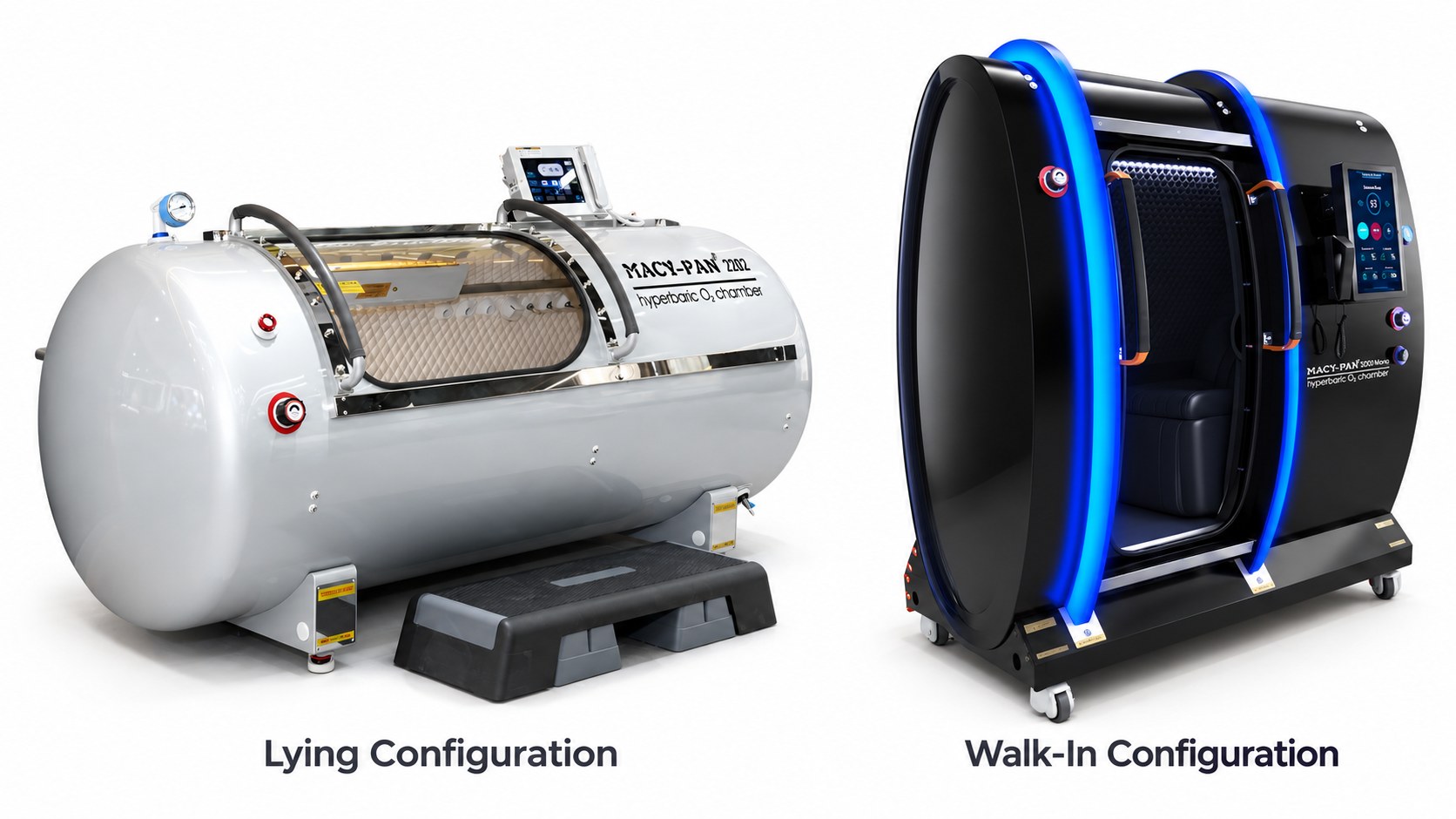
A lying configuration provides space for users who prefer or require a reclined position. MACY-PAN’s horizontal models offer different internal diameters, so compare usable space, entry opening and bed height. Confirm how users enter, reposition and receive assistance rather than judging accessibility from chamber size alone.
Seated and Walk-In Configurations
Seated layouts support users who prefer to remain upright. MACY-PAN’s walk-in models offer seating, bed or combined layouts depending on the model and configuration. Review the doorway, threshold, internal clearance and seating arrangement. Confirm wheelchair access, accompanying-person capacity and any special assistance requirements for the specific model.
Soft-Sided and Hard-Shell Structures
Soft-sided and hard-shell chambers differ in construction, setup and handling requirements. These categories alone do not determine user position, accessibility or operating pressure. Compare the complete specifications and entry procedure for each candidate, including any assembly or relocation requirements.
Once the layout and access meet your users’ needs, confirm the model’s operating-pressure range and available configuration.
How Should You Choose Operating Pressure?
Choose between 1.5 ATA and 2.0 ATA based on your intended use, operating requirements and the conditions applicable to your facility. Higher pressure alone does not make a chamber more suitable. For medical use, the responsible healthcare professionals should determine the required pressure and protocol.
Operating pressure is the pressure used during a session. Maximum allowable pressure is the documented limit under specified conditions; it is not a recommended session setting. Confirm both for the exact model and configuration.
Review these points with your supplier:
● Working pressure: Confirm the available operating range in ATA, which expresses absolute pressure, and have it recorded in the quotation and technical specifications.
● Pressure controls: Review how operators set, monitor and maintain pressure, including available internal and external controls.
● Pressurization and depressurization: Confirm how pressure changes are controlled and what operators must do during each stage.
● Emergency pressure release: Review the release controls, their locations and the model-specific operating procedure.
Follow the manufacturer’s instructions for the supplied configuration. For a closer comparison, read 1.5 ATA vs 2.0 ATA hyperbaric chambers.
Next, review how the complete system supplies oxygen to each user.
How Does the Chamber Supply Oxygen?
Chamber pressurization and oxygen delivery are separate functions: one establishes chamber pressure; the other supplies breathing oxygen to users. Confirm how the specific model performs each function and which supporting equipment is included in the quotation.
Review the complete system with your supplier:
● Pressurization and oxygen delivery: Confirm the gas used to pressurize the chamber and how users receive oxygen, such as through individual masks where specified.
● Individual breathing connections: Check the number and type of oxygen outlets, breathing accessories and connections provided for the planned users.
● Oxygen supply equipment: Confirm the oxygen source, specified purity, flow rate, delivery pressure and equipment quantity for the proposed configuration.
● Exhaust and site connections: Review how chamber ventilation and exhaled gas are managed, along with required hoses, connections and any external venting arrangements.
● Included equipment: Ask the supplier to list oxygen supply equipment, pressurization equipment, breathing accessories and connection parts separately, identifying included items and anything you must arrange locally.
Request a model-specific system diagram and equipment list before comparing quotations. Use these documents to confirm how the chamber and supporting equipment connect and what space the complete installation requires.
To understand how the chamber and supporting equipment fit together, review what is included in a complete hyperbaric chamber system before comparing configurations and quotations.
What Dimensions and Entry Conditions Should You Check?
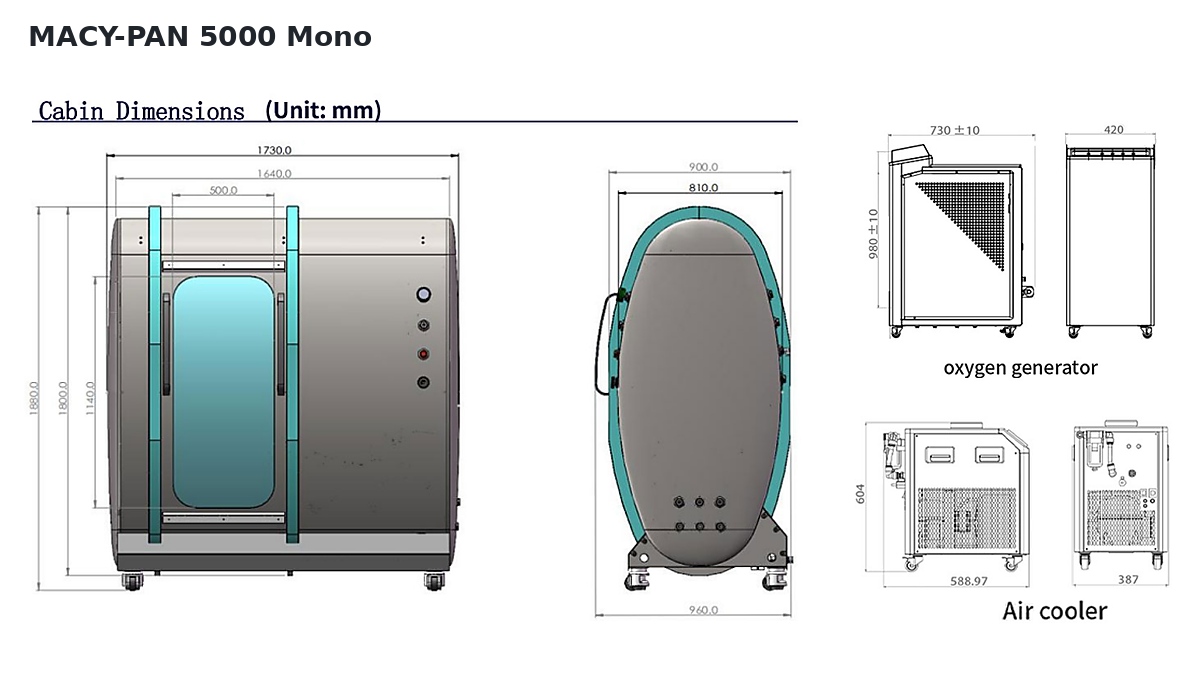
Internal diameter alone does not tell you how comfortably a user can sit, lie down or enter the chamber. Compare usable interior space and the entry procedure against your users’ body size, preferred position and assistance needs.
Usable Interior Dimensions
MACY-PAN 1501 and 2202 models offer different internal diameter options. Compare these alongside internal length, the bed or seating arrangement and space occupied by fittings. Choose dimensions that support the intended use rather than selecting the largest diameter by default.
Confirm:
● Usable length and height: Space available for the user in the intended seated or lying position.
● Bed or seat dimensions: Width, length, height and positioning within the chamber.
● Movement space: Room to reposition and use the breathing interface without obstruction.
● Configured layout: Actual clearances with the specified bed, seats and internal equipment installed.
Door Clearance and Assisted Entry
A spacious interior does not necessarily mean easy entry. Review the clear door opening, threshold and movements required to reach the bed or seat. Confirm wheelchair access and assisted entry for the exact model and layout.
Check:
● Clear opening: Usable door width and height, or opening diameter, rather than overall door dimensions.
● Threshold and entry height: Any step, raised edge or transfer height users must negotiate.
● Entry movements: Whether users need to bend, turn, step over or transfer onto a bed.
● Assistance space: Where staff can stand and how they can assist during entry and exit.
Request an annotated drawing showing the interior, bed or seats, clear door opening and threshold for your proposed configuration. For further guidance, review hyperbaric chamber dimensions.
Next, check the chamber’s external dimensions against your room and delivery route.
Will the Chamber Fit Your Room and Delivery Route?
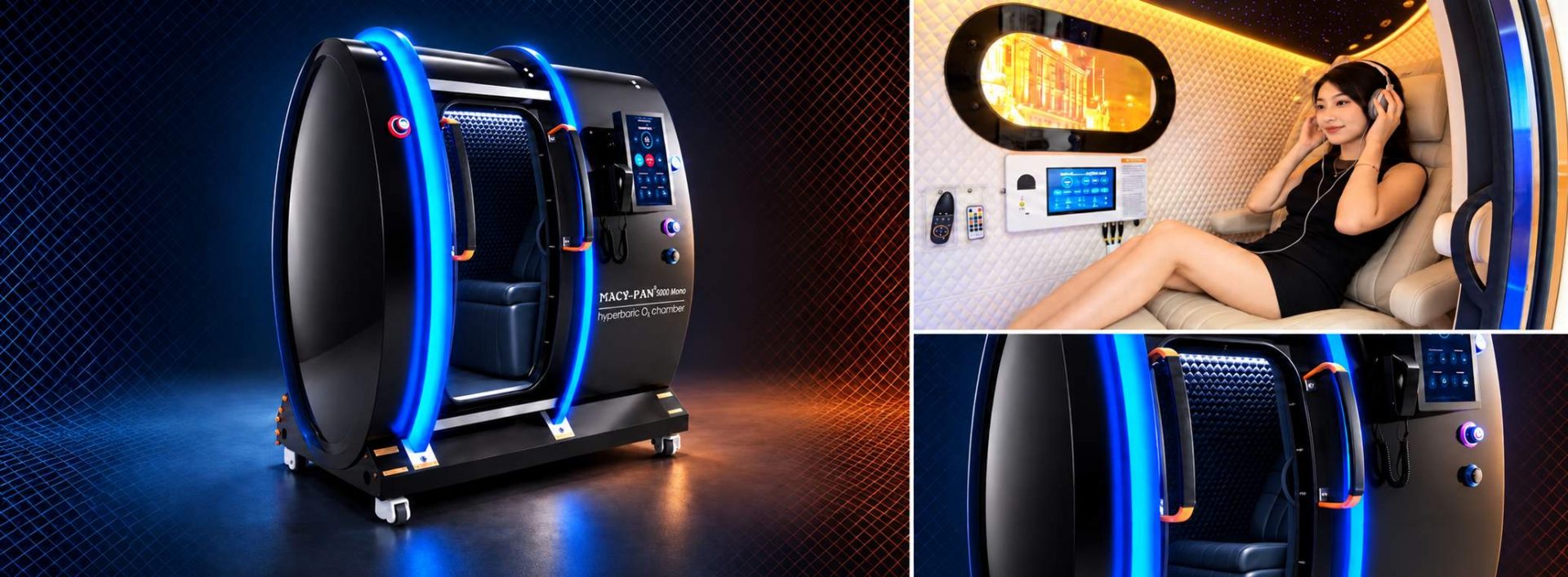
Check the complete installation and delivery route before preparing the room. The chamber must reach its final position with enough space for supporting equipment, user access, operation and maintenance. Confirm site requirements for the exact model and configuration.
Installation Space
Review a layout showing the chamber and all supporting equipment. Check:
● Overall dimensions: Chamber length, width and height, including projecting parts.
● Operating clearance: Space for door movement, user entry and staff assistance.
● Supporting equipment: Positions for oxygen supply, pressurization and cooling equipment, as specified.
● Maintenance access: Clearance to reach service points and remove components.
● Weight and floor conditions: Equipment weight and any floor-loading or positioning requirements that need local review.
Delivery Access
Measure the entire route from unloading to the installation position. Confirm:
● Shipping dimensions and weight: Each package and the chamber in its approved transport condition.
● Access openings: Clear widths and heights of doors, corridors and lifts.
● Turns and obstacles: Corners, stairs, thresholds and overhead restrictions.
● Handling arrangements: Unloading equipment, lifting capacity and who will move the equipment indoors.
Ask the supplier to confirm any permitted disassembly before planning around removable parts.
Utilities and Site Preparation
Confirm the required power supply, connections and site work before installation. Review:
● Electrical supply: Voltage, frequency, power requirements and specified circuit and grounding arrangements.
● Equipment connections: Locations and routing for hoses, cables and any required exhaust connections.
● Room conditions: Ventilation, temperature and other conditions specified for the complete system.
● Local preparation: Electrical work, access changes and handling arrangements to complete before delivery.
Share measured dimensions, site photos or a layout drawing for review. For a fuller planning checklist, see hyperbaric chamber room requirements.
Review hyperbaric oxygen chamber installation support to discuss remote guidance or project-dependent on-site assistance. Confirm the supplier’s support scope and who will complete local site preparation, unloading, positioning and utility work.
Once site fit is confirmed, review what the quoted chamber configuration includes.
What Should Your Chamber Configuration Include?
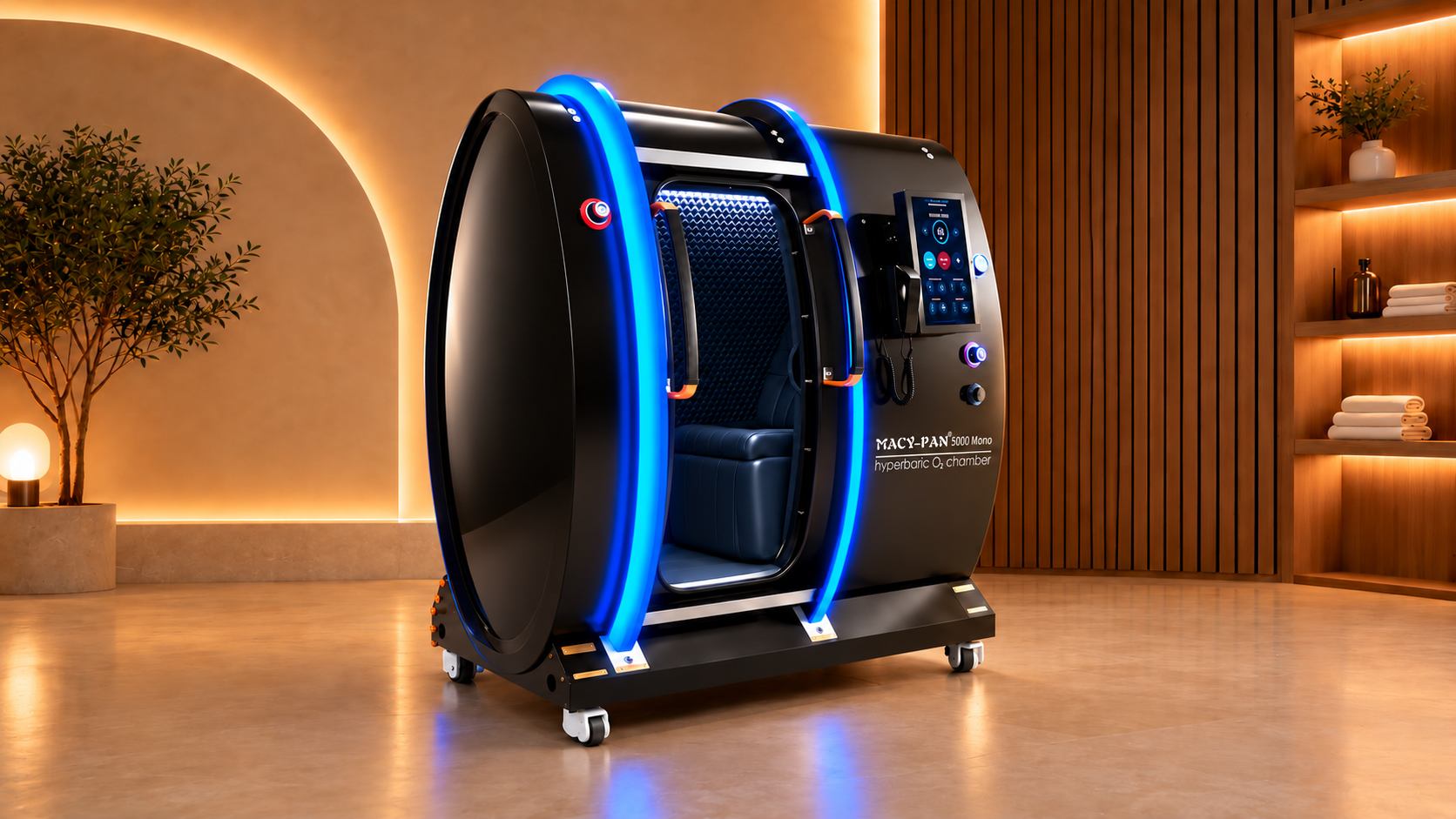
Confirm whether the quotation covers the chamber alone or a complete system with the supporting equipment needed for operation. Ask MACY-PAN to identify standard included items, optional items and customer-provided site requirements for your exact model and configuration.
| Configuration area | Scope to confirm |
| Chamber and pressure system | Chamber body, door assembly, pressurization equipment, pressure monitoring, pressure-release devices and connecting parts. |
| Oxygen supply and air management | Oxygen supply equipment, individual breathing interfaces, ventilation, cooling and any specified air-treatment or exhaust equipment. |
| Controls and communication | Internal and external controls, available operating modes, alarms, intercom and interface language. |
| Interior configuration | Seats, beds, cushions, lighting and the agreed layout, including space needed for users and accompanying personnel. |
For each area, record the equipment specifications and quantities, what the quoted price includes, which options carry an additional cost and what your facility must prepare locally. Do not assume that equipment shown in a product image is included.
Review hyperbaric chamber customization options to discuss interior layouts, branding, interface language and electrical requirements. MACY-PAN must confirm feasibility for the selected model before these changes become part of the agreed configuration.
Use the final configuration list to check that the quotation, system diagram and technical documents describe the same equipment.
What Documents and Supplier Evidence Should You Verify?
Review evidence for the exact chamber you plan to order and the company responsible for supplying it. Match the documents, manufacturing records and support commitments to the agreed model and configuration.
Model-Specific Documents
Company management-system certificates and product documents serve different purposes. A company certificate does not, by itself, establish the status of a particular chamber.
Check:
● Company identity: Match the manufacturer and supplier names across the quotation, contract and relevant documents.
● Model and scope: Confirm that product documents cover the quoted model, configuration and intended use.
● Technical information: Review specifications, system diagrams, operating manuals and available declarations or test reports.
● Destination requirements: Confirm which documents your local reviewers require for the planned installation and use.
Because equipment and facility requirements can vary by destination and intended use, review the applicable hyperbaric chamber regulations before confirming which documents your project requires.
Start with the MACY-PAN Documentation Center to review available materials. Follow how to verify hyperbaric chamber certification documents to check their relevance before ordering.
Manufacturing and Inspection Evidence
Review how the supplier manufactures, checks and prepares equipment for delivery. Ask for evidence that relates to the proposed model and, before shipment, the supplied unit.buyers who want to evaluate equipment design, testing and operating considerations in more detail can also review hyperbaric chamber safety before finalizing a purchase decision.
Check:
● Manufacturing facilities: Identifiable workshop photos, production videos or an agreed factory visit.
● Inspection records: Available pressure, sealing, electrical, control and safety-function test records, with the tested unit and results identified.
● Delivery checks: Final configuration confirmation, pre-shipment photos and packing records.
● Relevant projects: Documented installations showing the model, project context and support provided.
Use how to evaluate hyperbaric oxygen chamber manufacturers to compare supplier evidence alongside specifications and price.
Training, Warranty and Service Responsibilities
Confirm support responsibilities in writing before placing the order.
Check:
● Operator guidance: Manuals, instruction language, support format and the equipment-operation topics covered.
● Handover and readiness: Who reviews staff understanding, what records are provided and which local qualification requirements your facility must address.
● Warranty terms: Coverage period, covered components, exclusions and responsibility for parts, labour and shipping costs.
● Service arrangements: Support contact, troubleshooting process, spare-parts availability and responsibilities for local repairs.
Review hyperbaric chamber operator training to clarify the guidance and materials your team needs.
With the configuration and supplier responsibilities documented, compare quotations on the same scope.
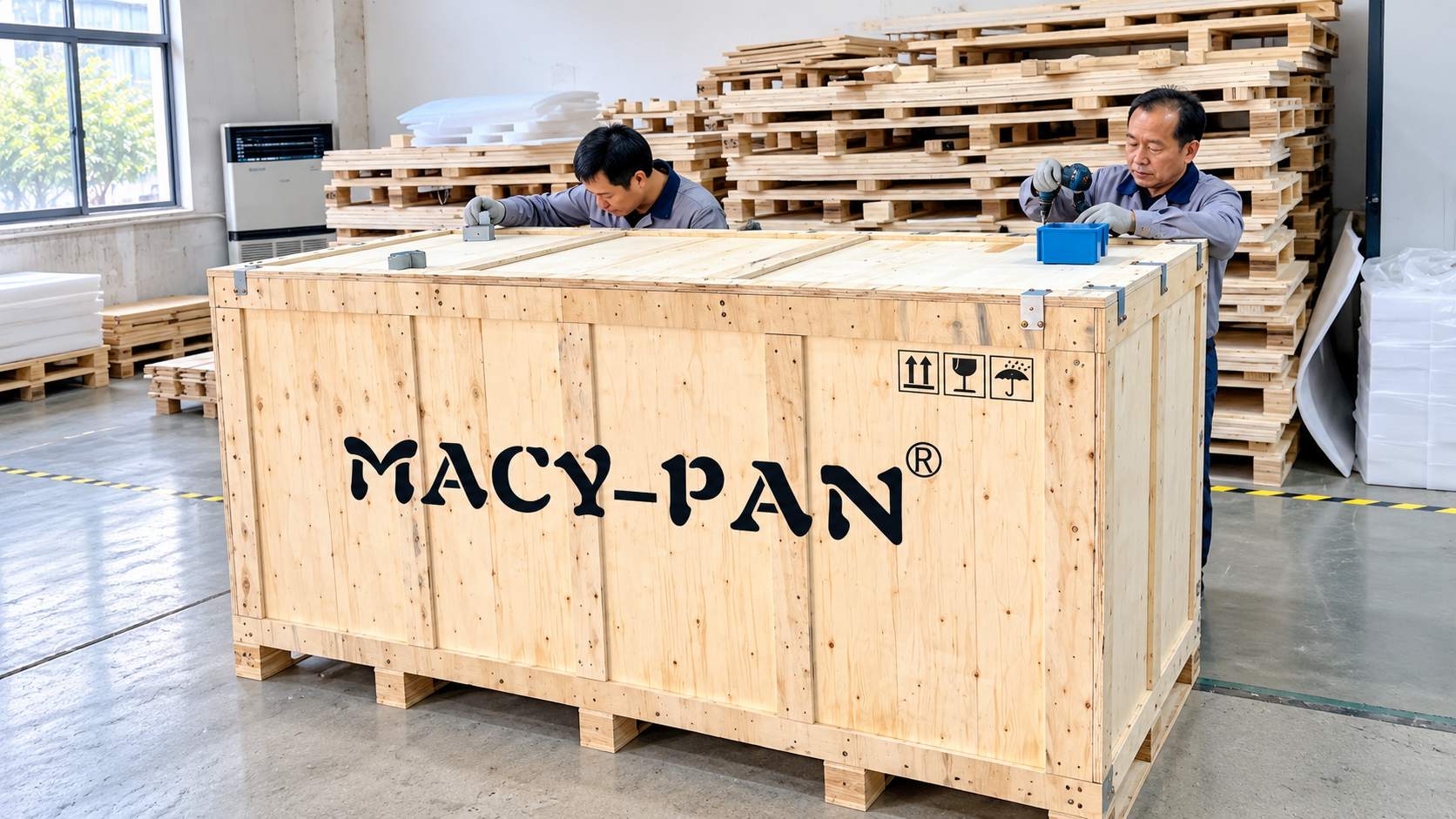
How Should You Compare Quotes and Project Costs?
Compare quotations against the same project requirements. Price differences may reflect different models, equipment quantities, delivery terms or support responsibilities. Ask each supplier to identify included items, exclusions and anything your facility must arrange separately.
Review three cost areas:
● Equipment purchase: The chamber, agreed configuration, supporting equipment, accessories and optional items.
● Delivery and commissioning: Freight, insurance, applicable import charges, unloading, indoor handling, site preparation, installation and operator guidance.
● Ongoing operation: Electricity, consumables, scheduled maintenance, replacement parts and staff time.
Use this checklist to compare the quoted scope:
| Quote item | What to confirm |
| Model and specifications | Same user capacity, operating pressure, dimensions and interior layout. |
| System configuration | Equipment specifications, quantities, connections and accessories included. |
| Delivery terms | Shipping destination, packing, freight and insurance scope, and where supplier responsibility ends. |
| Site work | Responsibility for unloading, positioning, electrical work, connections and room preparation. |
| Documents | Technical documents, inspection records and agreed document delivery dates. |
| Installation and training | Support format, scope, travel charges where applicable and customer responsibilities. |
| Warranty and service | Coverage, exclusions and responsibility for parts, labour and shipping. |
| Commercial terms | Currency, quotation validity, payment stages and agreed delivery schedule. |
Record unquoted items as costs still to be confirmed. A lower equipment price may require more spending before the chamber is ready for use. Review hyperbaric chamber cost to build a budget around the complete project.
Before selecting a supplier, bring these requirements together in a final buying checklist.
Hyperbaric Chamber Buying Checklist
Prepare the information below before requesting a model recommendation or quotation. Mark undecided items as “Not yet confirmed” so MACY-PAN can identify what needs further review.
| Requirement | What to prepare |
| Intended use | Facility type and planned chamber use. |
| Purchase purpose | Equipment for your own facility, business expansion or distribution. |
| User needs | Preferred seated or lying position, privacy, entry and assistance needs. |
| Capacity per session | Expected users and any accompanying personnel. |
| Appointment schedule | Individual or shared sessions, expected daily bookings and operating hours. |
| Operating pressure | Required pressure or the range still under review. |
| Interior layout | Preferred seating, bed or combined arrangement. |
| Site dimensions | Room measurements, delivery-route clearances and available photos or layout drawings. |
| Destination | Installation country and location. |
| Order quantity | Number of chambers required. |
| Customization | Layout, branding, interface language or electrical requirements. |
| Project timeline | Target order date, delivery date and planned start of use. |
Use these requirements to compare MACY-PAN model candidates, then confirm the configuration and site fit before ordering.
Which MACY-PAN Models Should You Compare?
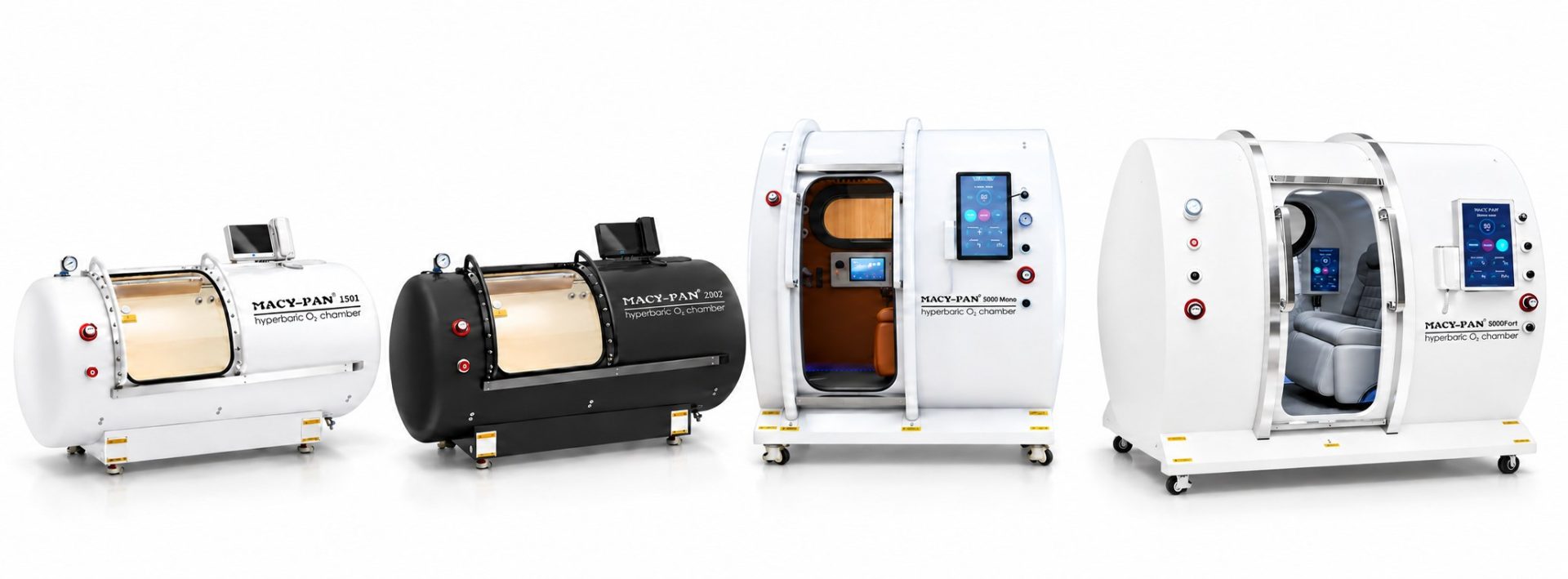
Use your buying checklist to narrow the model candidates. Compare user position, session capacity, operating pressure and access requirements, then confirm the complete configuration and site fit with MACY-PAN.
Single-User Lying Models
Compare MACY-PAN 1501 and MACY-PAN 2202 for individual sessions in a horizontal chamber. Review the available internal diameters, usable space, entry opening and supporting equipment. MACY-PAN 1501 offers a 1.5 ATA configuration; confirm the available operating pressure up to 2.0 ATA for the quoted MACY-PAN 2202 configuration.
Single-User Walk-In Models
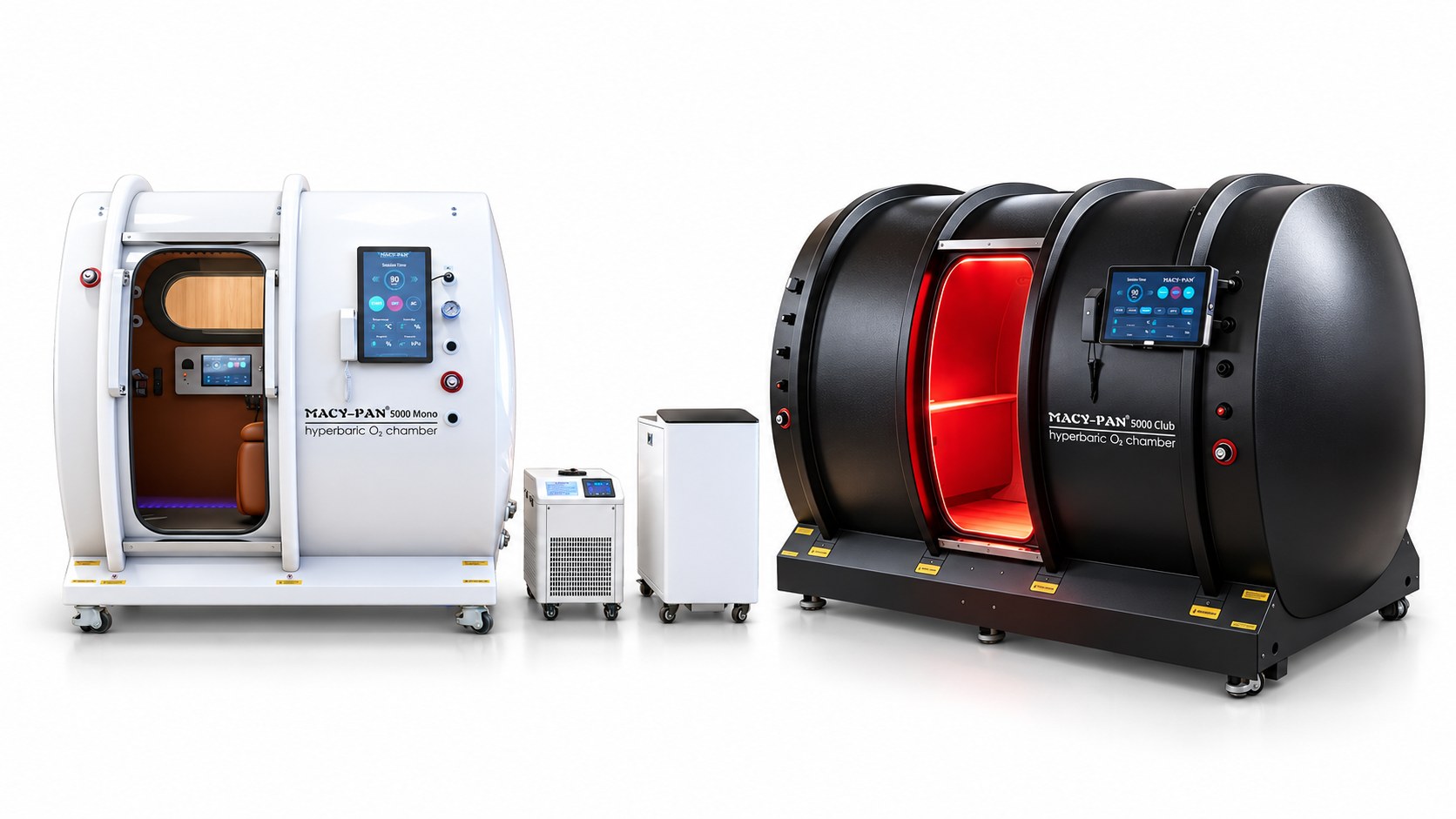
Review 5000 Mono for individual sessions with walk-in access. Check the doorway, threshold, interior arrangement and usable seated or lying space. Confirm the operating-pressure configuration and the space required for supporting equipment.
One- or Two-User Configurations
Review 5000 Fort when planning one-user sessions or shared use by two people. Confirm the actual capacity of the proposed seating, bed or combined layout. Include accompanying personnel in the occupancy count and review entry and assistance space.
Larger Shared-Use Configurations
Compare the MACY-PAN HE5000 series when your schedule requires more users to share a session. Review capacity, seating and bed arrangements, common operating cycles and the complete installation footprint for each configuration.
Explore monoplace hyperbaric oxygen chambers and multiplace hyperbaric oxygen chambers to review the available models. Share your shortlisted options and project requirements with MACY-PAN to confirm specifications before requesting a final quotation.
Hyperbaric Chamber Buying FAQs
Can I Request a Recommendation Before Choosing a Model?
Yes. Share your intended use, user needs, appointment schedule, destination and available site information with MACY-PAN. Mark undecided requirements clearly so the team can identify suitable candidates and explain what still needs confirmation.
Can Two Similar-Sized Chambers Have Different Usable Space?
Yes. Similar external dimensions or internal diameters do not guarantee the same usable space. Beds, seats, door arrangements and internal fittings affect movement and access. Compare dimensioned drawings of the proposed layouts.
What Should I Do When My Delivery Access Is Limited?
Request a delivery-route review before ordering. Share clear opening measurements, corner dimensions, lift limits and route photos. Ask MACY-PAN to confirm transport dimensions, permitted disassembly and handling requirements before arranging access changes or lifting equipment.
Which Documents Should I Review Before Paying a Deposit?
Review the quotation, agreed specifications, equipment list, commercial terms and relevant model documents. Confirm the contracting company, warranty and support scope. Agree in writing which unit-specific inspection records will be supplied after production and before shipment.
Can I Expand Chamber Capacity Later?
Expansion may involve adding chambers or selecting a different configuration. Do not assume an existing chamber can accommodate extra users through layout changes. Ask MACY-PAN to review the approved capacity, available space, utilities and supporting equipment before planning an expansion.
Request a Hyperbaric Chamber Configuration Review
Share your intended use, user capacity, destination and available room or delivery-route measurements. Include site photos or a layout drawing where available. You can request a review before choosing a model or operating pressure—tell us what is still undecided.
MACY-PAN can discuss candidate models, the proposed equipment scope and site-fit requirements with you, then identify the information still needed to prepare a quotation.
Request a Configuration Review