Hyperbaric Chamber Safety Standards: What Buyers Should Check
Hyperbaric chamber safety standards cover pressure-vessel construction, pressure control, fire prevention, electrical systems, ventilation, emergency functions and operating procedures. The applicable requirements depend on the chamber type, intended use, operating pressure, installation facility and destination market. This guide explains the main standards, safety systems and documents buyers should check before selecting a hyperbaric chamber.
Buyers should verify the applicable standards together with the available hyperbaric chamber certification documents for the selected model, configuration and destination market.
What Do Hyperbaric Chamber Safety Standards Cover?
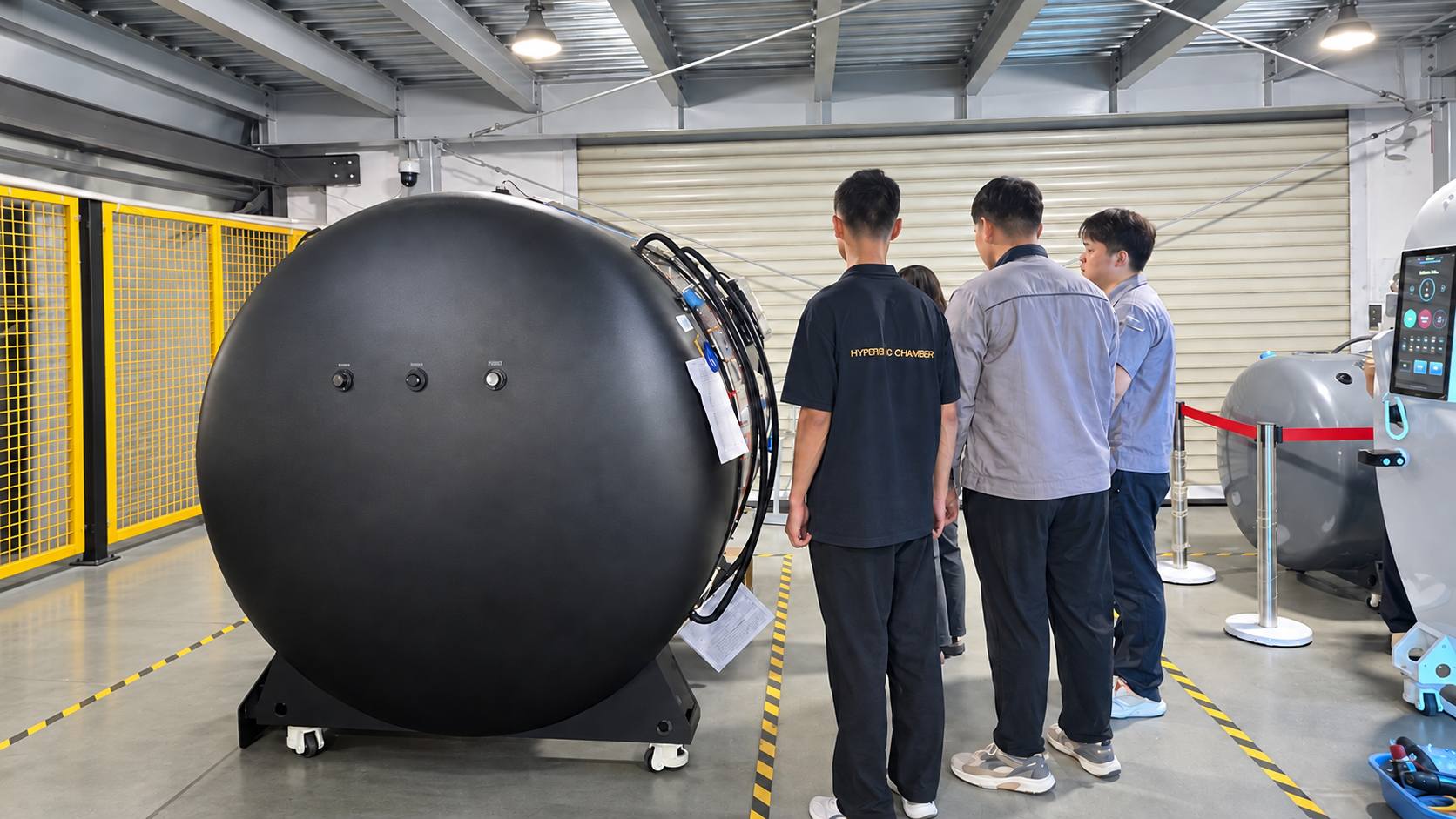
Hyperbaric chamber safety standards are technical and operational requirements used to control structural, pressure, fire, electrical, oxygen-enrichment and operating risks throughout the chamber’s service life. They apply not only to chamber construction but also to its control systems, installation environment, routine operation, inspection and maintenance.
A complete safety review should cover the following areas:
● Pressure-Vessel Structure: Chamber materials, structural design, pressure-bearing components, doors, windows, seals and pressure testing.
● Pressure Control and Monitoring: Pressurization, pressure holding, depressurization, pressure display and independent monitoring functions.
● Fire Prevention and Oxygen Management: Control of ignition sources, material selection and management of oxygen-enriched environments.
● Electrical Safety: Electrical components, wiring, grounding, power protection and equipment suitability for the intended installation.
● Ventilation and Carbon Dioxide Management: Continuous airflow and CO₂ control during chamber operation.
● Communication and User Monitoring: Communication between the operator and chamber user, with suitable observation and monitoring functions.
● Emergency Pressure Release: Defined emergency depressurization functions and procedures for abnormal operating conditions.
● Installation and Facility Requirements: Room layout, access, ventilation, electrical supply, equipment clearance and applicable facility conditions.
● Inspection and Maintenance: Pre-use checks, scheduled inspection, component replacement and maintenance records.
● Operator Procedures and Training: Operating instructions, emergency procedures, user screening and training for responsible personnel.
Which Safety Standards May Apply to a Hyperbaric Chamber?
The safety standards and regulatory requirements applicable to a hyperbaric chamber depend on the chamber type, intended use, operating pressure, installation location and destination market. Buyers should not assume that one certificate or standard covers every model, configuration or country. Before purchase, confirm the applicable requirements with the manufacturer, local regulatory authority and authority having jurisdiction (AHJ).
The name of a standard alone is not enough to confirm compliance. Buyers should review the model number, certified scope, test basis and destination-market relevance in the available hyperbaric chamber certifications and technical documents
ASME PVHO Standards for Pressure Vessels for Human Occupancy
PVHO means Pressure Vessels for Human Occupancy. The ASME PVHO standards address pressure vessels in which a person may be exposed to an internal pressure that differs from ambient conditions.For a detailed purchasing review, see ASME PVHO-1 for hyperbaric chambers to understand what evidence and model-specific documents buyers should verify.
ASME PVHO-1 covers areas related to the design, fabrication, examination, testing and marking of pressure vessels for human occupancy. For a hyperbaric chamber, this may include the pressure-bearing shell, doors, viewing windows, seals, penetrations and other parts of the pressure boundary.
ASME PVHO-2 focuses on in-service guidance, including inspection, maintenance, repair and continued management of the pressure vessel after installation. Buyers should therefore distinguish between manufacturing-stage compliance and the requirements for ongoing inspection during the chamber’s service life.
Before relying on an ASME claim, confirm whether the specific chamber model, pressure rating and configuration were designed, manufactured, inspected or tested to the relevant PVHO requirements. Request model-specific records instead of treating a general manufacturer statement as proof for every chamber.
NFPA 99 Requirements for Hyperbaric Facilities
NFPA 99 is a healthcare-facilities code structured around risks to patients, staff and visitors. Its hyperbaric-facility requirements address areas such as fire prevention, electrical systems, oxygen-enriched environments, material control, ventilation, operating procedures and management of the room in which the chamber is installed. NFPA 99 also distinguishes requirements according to the type and use of the hyperbaric facility.
The relevant facility provisions can differ between monoplace and multiplace chamber installations because their pressure environments, oxygen-delivery methods, occupancy arrangements and operating procedures are not the same. Equipment selection should therefore be reviewed together with the proposed room, supporting systems and facility workflow.
The applicable edition of NFPA 99 and the way it is enforced are normally determined by local regulations and the authority having jurisdiction. Buyers planning a medical facility should confirm these requirements before finalizing the chamber configuration or installation layout.
For facility planning, review NFPA 99 requirements for hyperbaric chamber facilities before finalizing the chamber configuration and installation layout.
EN 14931 for Multiplace Hyperbaric Chamber Systems
EN 14931 addresses multiplace pressure-chamber systems intended for hyperbaric therapy, including relevant performance, safety and testing requirements. Its scope may cover the chamber system, pressure-control functions, gas supply, communication, monitoring, emergency provisions and system testing.
This standard should not be presented as a universal requirement for every monoplace chamber or every destination market. Its applicability must be confirmed according to the chamber type, intended use, project location and regulatory pathway. Buyers considering a multiplace system should request documents that clearly identify the tested model, configuration, pressure rating and referenced standard.
Medical Device Regulations in the Destination Market
Safety standards do not replace the medical-device or market-access requirements of the destination country. Buyers should verify the regulatory status of the exact chamber model and its intended use before ordering, importing or placing it into service.
For projects in the United States, confirm the applicable FDA classification and regulatory pathway for the specific device. A 510(k) is a premarket submission used to demonstrate substantial equivalence to another legally marketed device. Buyers should verify the manufacturer, device name, model information and clearance record rather than relying on the word “FDA” alone. A device subject to this pathway may not be marketed in the United States until FDA has issued a substantial-equivalence determination. Review the FDA’s official 510(k) explanation.
For projects in the European Union, the required conformity-assessment route and CE documentation depend on the product’s intended purpose, medical-device classification and applicable requirements under the EU Medical Device Regulation. Buyers should review the Declaration of Conformity, certificate scope where applicable, manufacturer details, model identification and supporting technical documentation. Review Regulation (EU) 2017/745 on medical devices.
Other destination markets may require local device registration, import authorization, testing, labeling or approval by a national authority. A manufacturer’s quality-management certificate does not by itself establish that a particular chamber model is authorized for sale or clinical use in that market.
Because regulatory requirements vary by destination, equipment and intended use, review the applicable hyperbaric chamber regulations before ordering.
ISO Quality and Risk-Management Standards
ISO standards may support the processes used to design, manufacture and manage hyperbaric chamber products:
● ISO 13485 specifies quality-management-system requirements for organizations involved in medical devices.
● ISO 9001 specifies general quality-management-system requirements applicable across industries.
● ISO 14971 provides a framework for identifying, evaluating, controlling and monitoring risks associated with medical devices.
● Electrical safety and EMC standards should be confirmed separately according to the chamber’s electrical design, intended use, equipment classification and destination-market requirements.
These standards can support design and manufacturing controls, but they do not automatically prove that every chamber model is approved for sale or clinical use in every market. Buyers should check the certificate holder, certified scope, validity, issuing body and connection to the manufacturer, then review the product-specific certification and test documents for the selected model.
How Safety Requirements Differ by Chamber Type
Hyperbaric chamber safety requirements vary because monoplace and multiplace systems have different occupancy arrangements, gas-delivery methods, control systems and facility needs. Buyers should evaluate the complete chamber configuration and installation environment rather than applying the same checklist to every chamber type.
Monoplace Hyperbaric Chambers
A monoplace hyperbaric chamber is generally designed for one user per session. The chamber atmosphere, oxygen-delivery method and pressure-control configuration vary by model, so these details should be confirmed before purchase.
Buyers should review the viewing area, operator-to-user communication, pressure monitoring, controlled pressurization and depressurization, emergency pressure release and the method used to enter and exit the chamber. Door access, user mobility and operator visibility should also be assessed for the intended facility and user group.
Review MACY-PAN monoplace hyperbaric oxygen chambers by operating pressure, chamber size, entry type and available safety configuration.
Multiplace Hyperbaric Chambers
A multiplace hyperbaric chamber accommodates more than one user and may include seating, beds or a combined interior layout. Its safety planning is generally more complex because the system must manage user capacity, individual oxygen delivery, air circulation, carbon dioxide levels, communication, internal controls and emergency procedures.
Buyers should also evaluate the chamber room, fire-control measures, oxygen-supply arrangement, operator responsibilities, user supervision and evacuation procedures. The facility layout and daily operating workflow should be reviewed together with the chamber rather than treated as separate purchasing decisions.
Compare available multiplace hyperbaric oxygen chambers by user capacity, interior layout, oxygen-delivery system and facility requirements.
Clinical, Wellness and Private-Use Projects
A chamber should not be considered suitable or safe based only on labels such as “medical,” “wellness” or “home-use.” The required safety systems, documentation and regulatory pathway depend on the actual project conditions.
Buyers should evaluate:
● Intended Use: How and where the chamber will be operated.
● Operating Pressure: The selected working-pressure range and its associated requirements.
● Number of Users: Single-user or multi-user capacity and the level of supervision required.
● Oxygen-Delivery Method: How oxygen is supplied and how the chamber atmosphere is managed.
● Installation Environment: Room size, access, ventilation, electrical supply and emergency arrangements.
● Local Regulatory Classification: How the chamber and its intended use are classified in the destination market.
These factors should be confirmed before selecting a model, reviewing certification documents or planning the installation.
If you have not yet confirmed the required chamber type, use our hyperbaric oxygen chamber selection guide to compare capacity, pressure, access and installation requirements.
What Safety Systems Should Buyers Check on the Chamber?
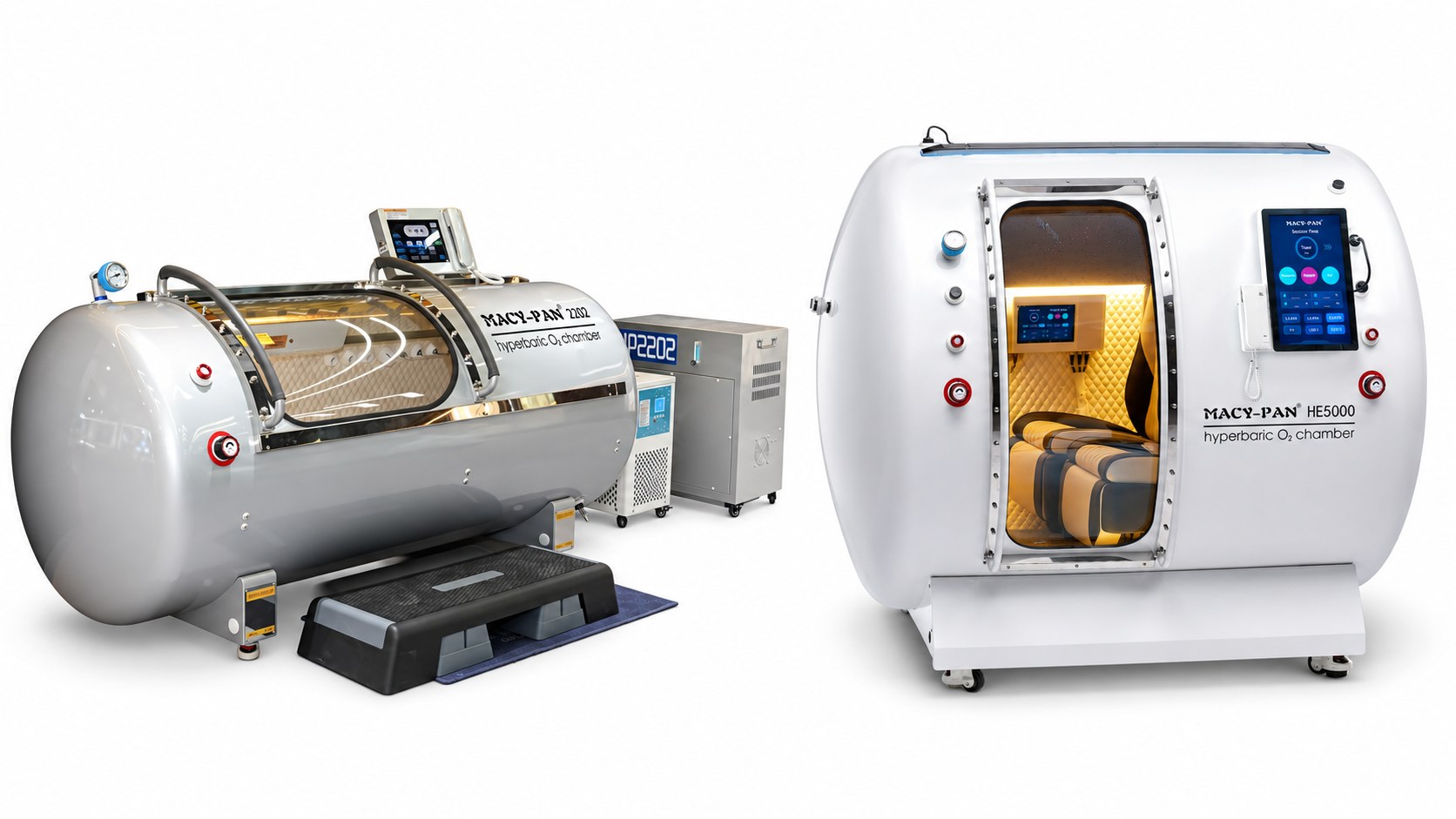
Buyers should verify how each chamber controls pressure, electrical, ventilation, communication, access and emergency risks. The presence of a safety feature alone is not sufficient: its operating method, limits, alarm response and applicability to the selected model should also be confirmed. Use the following checklist when comparing chamber configurations and reviewing supplier documents.
Safety also depends on how the chamber is prepared, inspected and operated each day. Use the hyperbaric chamber safety checklist to review routine checks before operation.
| Safety area | What buyers should check | Evidence to request |
| Pressure Monitoring | Real-time pressure display, control accuracy, sensor configuration and operator monitoring | Technical specifications, pressure-control description and calibration or test records |
| Overpressure Protection | Overpressure alarms, pressure-limiting controls and pressure-relief design | Safety-system description, system diagram and functional test records |
| Controlled Decompression | Normal decompression control and a defined method for controlled emergency depressurization | Operating procedures, decompression settings and functional test records |
| Emergency Pressure Release | Emergency pressure-release method, activation points and operator access | System diagram, operating manual and emergency-procedure instructions |
| Power Interruption | Power-failure alarm, chamber status after power loss and available backup or manual functions | Electrical documentation, alarm description and power-interruption test records |
| Communication | Reliable two-way communication between the chamber user and operator | Model configuration sheet, communication-system specifications and operating demonstration |
| Ventilation and CO₂ Management | Air circulation, fresh-air supply, CO₂ management and any related monitoring functions | Gas-flow diagram, ventilation specifications and system test information |
| Door, Seal and Closure Monitoring | Door structure, sealing method, closure indication and any available door-status detection | Structural description, inspection records and door-system operating instructions |
| Fire Prevention | Material suitability, electrical controls, oxygen-management measures and restrictions on items permitted inside the chamber | Material information, electrical specifications, operating restrictions and facility requirements |
| User Monitoring | Viewing windows, camera options and the operator’s ability to observe the user during a session | Model configuration sheet, chamber drawings and monitoring-system specifications |
The exact safety systems and available records may vary by chamber model and configuration. Buyers should request documents that identify the model, operating pressure and tested configuration rather than relying only on a general product brochure.
What Buyers Should Check for Fire and Oxygen Safety
Oxygen does not burn, but increased oxygen concentration can make combustible materials ignite more easily and burn more rapidly. Fire safety therefore depends on controlling the chamber atmosphere, materials, electrical systems, ignition sources, operating procedures and surrounding facility as one complete system. No single component or material can eliminate fire risk by itself.
Buyers should review the following areas for the selected chamber and installation:
● Chamber Atmosphere and Oxygen Delivery: Confirm whether the chamber is pressurized with air or another specified gas, how oxygen is delivered to the user and how oxygen leakage or accumulation is controlled.
● Interior Materials and Accessories: Request information about the materials used for seating, mattresses, covers, flooring, clothing and other items permitted inside the chamber. Their suitability should be assessed for the intended chamber environment.
● Electrical Equipment and Ignition Sources: Verify which electrical components are installed inside or near the chamber and how switches, wiring, lighting, batteries, electronic devices and other potential ignition sources are controlled.
● Static-Electricity Management: Review grounding, humidity-management measures, permitted clothing and operating procedures intended to reduce static discharge.
● Oxygen Connections and Interfaces: Check the oxygen-supply connections, hoses, masks or hoods, valves and fittings for compatibility, secure connection and suitable maintenance access.
● Ventilation and Gas Discharge: Confirm how fresh air is supplied, how chamber gases are circulated and where exhaust or discharged gases are directed. The arrangement should be reviewed as part of the facility plan.
● Restricted Items: The operating manual should clearly identify prohibited or controlled items, including personal electronics, batteries, ignition sources, oils, cosmetics and materials not approved for chamber use.
● Daily Inspection and Operator Responsibilities: Operators should follow documented pre-use checks covering the chamber interior, oxygen-delivery equipment, communication, pressure controls, permitted items and user preparation.
● Facility Fire-Safety Requirements: Review room construction, ventilation, fire detection, suppression provisions, oxygen storage, emergency access and evacuation procedures with the facility designer and local authority having jurisdiction.
Fire and oxygen-safety requirements vary by chamber type, oxygen-delivery method, intended use and local regulations. Buyers should request model-specific material information, gas-flow documentation, operating restrictions and facility requirements, then confirm their applicability with qualified local professionals before installation.
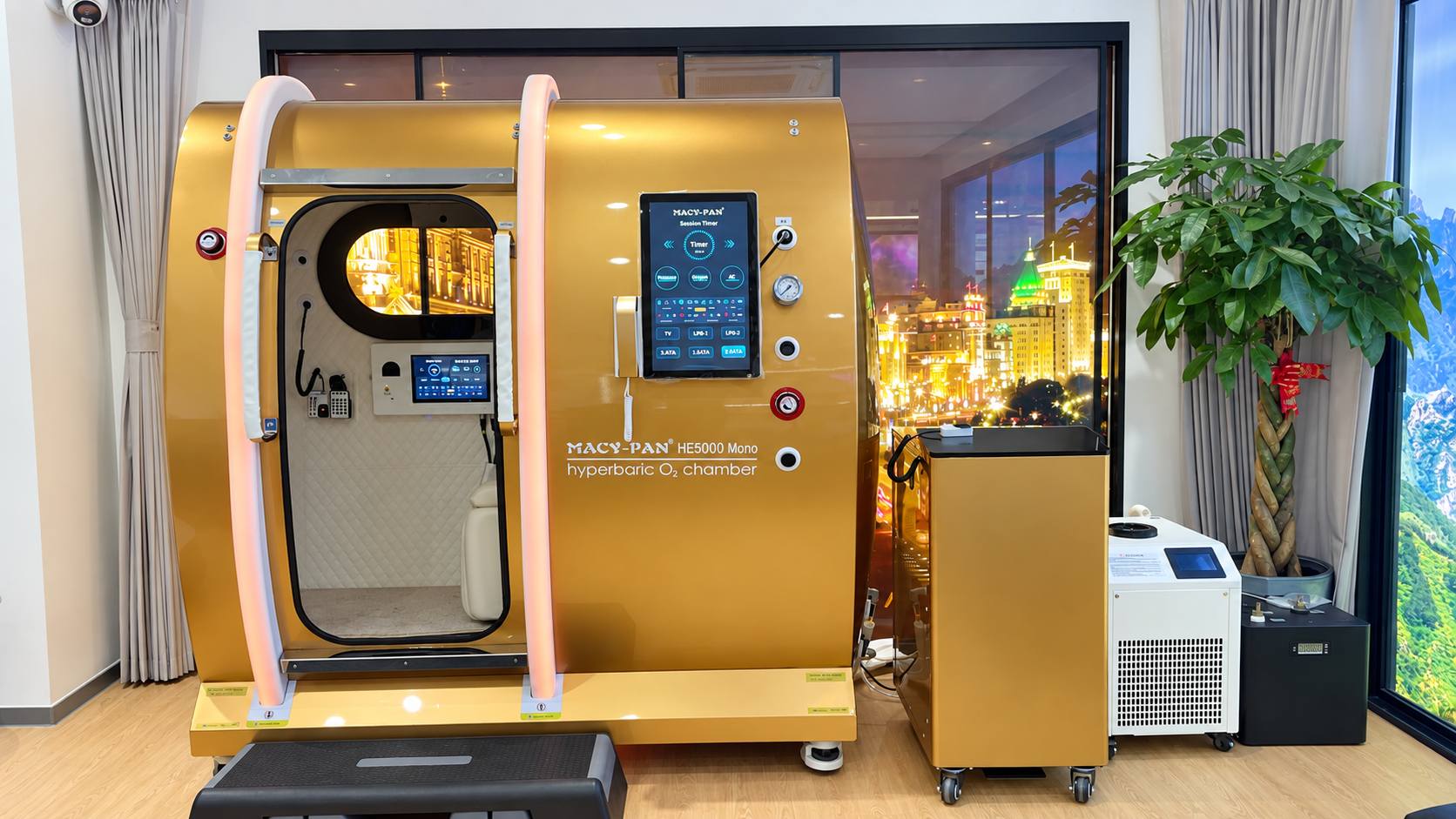
What Buyers Should Check in Pressure Control and Emergency Systems
A hyperbaric chamber should manage pressure through defined controls for normal operation, abnormal conditions and emergencies. Buyers should examine how the system controls pressurization, pressure holding and decompression, as well as how alarms, independent monitoring, relief devices and manual functions work together. These features must be verified for the specific model and operating-pressure configuration.
Primary Pressure Control
The primary control system manages the normal pressurization, pressure-holding and decompression stages of a session. Buyers should confirm the available operating modes, pressure-setting range, control accuracy, adjustment method and information displayed to the operator.
Request the operating manual, pressure-control specifications and functional test records. The documentation should explain how the operator starts, monitors, adjusts and ends a normal session.
Independent Pressure Monitoring
Independent or redundant pressure monitoring can help operators identify differences between the control reading and the actual chamber pressure. The number, type and arrangement of pressure sensors or gauges vary by chamber model.
Buyers should confirm whether the selected configuration includes a separate pressure indication or monitoring channel, how it functions if the primary system reports an error and how the monitoring devices are calibrated and inspected.
Overpressure Protection
Overpressure protection normally uses multiple control layers rather than relying on one component. These may include software limits, pressure alarms, automatic control responses and mechanical pressure-relief devices.
Buyers should verify the activation conditions and relationship between these protective functions. Request the safety-system description, pressure-relief specifications and available test records for the selected chamber and pressure rating.
Emergency Depressurization
Emergency depressurization provides a defined method for reducing chamber pressure when continued operation presents a greater risk. It should not be evaluated only by how quickly the chamber can return to ambient pressure. An excessively rapid pressure change can introduce additional risks to chamber users.
Buyers should confirm the emergency-depressurization method, activation location, operator control and expected response for the specific model. The operating manual should also define when the function may be used and what procedures the operator must follow.
Power-Failure Response
Buyers should understand what happens if electrical power is interrupted during a session. Check whether the chamber provides a power-failure alarm and how pressure indication, communication, lighting, valves and control functions behave after power is lost.
The manufacturer should explain the available manual controls, backup functions and operator intervention required for a controlled response. Request electrical documentation, alarm descriptions, power-interruption test information and the relevant emergency operating procedure.
Buyers should compare the applicable standards with the model-specific hyperbaric chamber certification documents rather than relying only on certification logos.
What Safety Documents Should Buyers Request Before Ordering?
Before confirming an order, buyers should review the documents for the exact chamber model, pressure configuration and destination market. This helps verify whether the proposed system matches the project’s intended use, installation conditions, operating requirements and applicable compliance needs.
Request the following documents where applicable:
1. Model-Specific Technical Specification
Confirms chamber dimensions, capacity, operating pressure, system components and selected configuration.
2. Intended-Use Statement
Defines the manufacturer’s stated application and operating environment for the selected model.
3. Operating-Pressure Range
Identifies the rated pressure range and applicable operating limits.
4. Product Certification or Conformity Documents
Provides available model- or configuration-specific certification, declarations and test documentation.
5. Quality-Management Certificates
Confirms the manufacturer’s certified quality-management systems and the scope covered by each certificate.
6. Pressure and Functional Test Records
Documents the pressure testing, system checks and functional inspections completed for the chamber.
7. Electrical and Control-System Documentation
Covers electrical requirements, control functions, alarms, monitoring systems and relevant system diagrams.
8. Operation and Maintenance Manual
Provides instructions for routine operation, safety checks, troubleshooting and equipment maintenance.
9. Installation Requirements
Specifies room dimensions, delivery access, electrical supply, ventilation, equipment placement and required service clearances.
10. Preventive-Maintenance Schedule
Identifies recommended inspection intervals, maintenance tasks and component replacement requirements.
11. Critical-Component List
Clarifies the main pressure-control, monitoring, oxygen-delivery, alarm and emergency-system components.
12. Warranty and After-Sales Scope
Defines warranty coverage, exclusions, technical support, spare-parts availability and service responsibilities.
Buyers should verify the model number, selected configuration, certificate holder, applicable standard, issue date, validity and destination-market relevance of every document. A general company certificate should not be treated as proof that every chamber model is approved for every application or market.
Before accepting supplier documents, see how to verify hyperbaric chamber certification documents before ordering to check model, scope, validity and project relevance.
MACY-PAN provides available certification and technical documents according to the selected chamber model, configuration and project destination.
How MACY-PAN Applies Safety Controls During Manufacturing
MACY-PAN applies defined controls throughout chamber manufacturing, system integration, pressure testing and final inspection. The exact safety configuration, inspection scope, test records and available documents should be confirmed according to the selected chamber model, operating pressure, order configuration and destination market.
Learn how MACY-PAN manages chamber fabrication, system integration, assembly and final inspection through its hyperbaric chamber manufacturing process
Material and Component Inspection
Key materials and purchased components are inspected before production and assembly. Pressure-related, control-system and air-supply components are checked against the requirements of the selected model, with applicable material and component records maintained for production review.
Chamber Structure and Assembly Control
The chamber body, door, viewing sections, seals and related structural components are assembled and checked according to the design and configuration of the selected model. Inspection requirements vary between monoplace and multiplace chambers and between different chamber structures.
Pressure-System Integration and Testing
Pressure-control components, pipelines, valves and connection points are integrated and inspected as part of the chamber system. Testing may cover pressurization, pressure holding, controlled depressurization, pressure release and connection integrity. The applicable test scope and records depend on the model and confirmed order configuration.
Electrical and Control-System Inspection
The control interface, sensors, alarms, electrical connections and available internal or external controls are checked during system integration. Where included in the selected configuration, functions related to communication, power interruption and abnormal operating conditions are also verified.
Safety-Function Verification
Depending on the selected model and configuration, available safety systems may include:
● Automatic pressurization, pressure holding and depressurization
● Pressure monitoring
● Overpressure protection
● Emergency pressure release
● Power-failure alarms
● Internal and external communication
● Air circulation
● CO₂ management
● Door-status monitoring
● Internal and external controls
Buyers should confirm which functions are included, how they operate and what test documentation is available for the specific chamber being ordered.
Final Inspection and Shipment Documentation
Before shipment, MACY-PAN checks the chamber’s confirmed configuration, main operating functions and system components. Packaging is also inspected before dispatch. Available technical specifications, test records, manuals and related documents are prepared according to the chamber model and order requirements.
How Buyers Can Evaluate a Hyperbaric Chamber Manufacturer
A reliable hyperbaric chamber manufacturer should be able to explain how its products, documents and support relate to the buyer’s selected model and project. Buyers should evaluate more than product appearance or certificate logos and ask for clear, verifiable information before comparing quotations.For a complete supplier due-diligence framework, see how to evaluate hyperbaric oxygen chamber manufacturers before comparing quotations.
1. Confirm the Standards Applicable to the Model
Ask the manufacturer to identify which standards or technical requirements apply to the specific chamber model, operating pressure, intended use and destination market. General references to “international standards” are not sufficient without a defined scope.
2. Request Model-Specific Documents
Product specifications, conformity documents and test records should identify the relevant model or product family. Company-level certificates alone do not confirm the certification or market suitability of every chamber model.
3. Distinguish Standards, Certifications and Test Reports
The supplier should clearly explain whether a document is an industry standard, quality-management certificate, product certificate, declaration of conformity or test report. These documents serve different purposes and should not be presented as interchangeable.
4. Verify Destination-Market Relevance
Document requirements can vary by market and intended application. A responsible manufacturer should ask where the chamber will be installed and help identify which available documents require review for that destination.
5. Review Installation and Facility Requirements
Before ordering, buyers should receive clear information about room dimensions, delivery access, electrical supply, ventilation, equipment placement, operating clearance and maintenance access. These requirements should be evaluated before the chamber enters production or shipment is arranged.
6. Check Maintenance and Spare-Parts Support
Ask for the recommended daily checks, preventive-maintenance schedule, critical-component list and spare-parts arrangements. Buyers should also confirm who is responsible for routine maintenance and how technical issues will be handled after installation.
7. Confirm Training and After-Sales Support
The supplier should define the available support for installation guidance, system commissioning, operator training, troubleshooting, warranty service and replacement parts. The scope and delivery method should be confirmed in the quotation or project agreement.
Warning Signs Buyers Should Not Ignore
Buyers should investigate further if a supplier:
● Displays certification logos without providing the certificate scope
● Presents a company quality-management certificate as product certification for every model
● Provides documents with a manufacturer name or model number that does not match the quoted chamber
● Does not ask about the destination market or intended use
● Cannot provide installation, electrical, ventilation or maintenance requirements
● Uses absolute claims such as “100% safe” or “zero risk”
A qualified supplier should be willing to clarify document scope, model applicability and project responsibilities before the order is confirmed.
How Installation and Daily Operation Affect Chamber Safety
A chamber’s design and manufacturing documentation are only part of the safety assessment. The installation environment, supporting systems, operating procedures and routine maintenance also affect how safely and reliably the chamber can be used. These requirements should be reviewed for the selected model before delivery and maintained throughout daily operation.
Room Layout and Installation Access
Confirm the room dimensions, entrance width, corridors, lifts, turning space and delivery route before ordering. The planned chamber position should provide sufficient door clearance, unobstructed user access and space for installation work.
Electrical Supply and Ventilation
Verify the required voltage, frequency, power capacity, grounding and connection method for the chamber and supporting equipment. The room should also provide suitable ventilation and heat dissipation based on the selected system and expected operating schedule.
Supporting Equipment and Operator Position
Air compressors, oxygen systems, cooling equipment and control stations should be positioned according to the confirmed installation plan. Operators need clear access to the controls, chamber entrance, communication system and emergency functions during each session.
Emergency Access and Fire-Control Planning
The chamber entrance, room exit and emergency access routes should remain unobstructed. Fire-control planning should consider the chamber type, oxygen-delivery arrangement, electrical equipment, room layout and applicable facility requirements. Site-specific arrangements should be reviewed with qualified local professionals.
Maintenance Clearance
Allow sufficient space around the chamber and supporting equipment for inspection, cleaning, ventilation and component servicing. Required maintenance clearances vary by model and installation configuration and should be confirmed before the final room layout is approved.
Daily Inspection and Cleaning
Operators should complete the prescribed pre-use and daily checks, including the chamber condition, door and seals, pressure controls, communication functions, alarms and supporting systems where applicable. Cleaning procedures should follow the manufacturer’s instructions and use materials compatible with the chamber environment.
Prohibited Items and User Preparation
Facilities should establish clear rules for clothing, electronic devices, oils, cosmetics, ignition sources and other prohibited or restricted items. Users should receive instructions before entering the chamber, and operators should verify compliance before each session.
Staff Training and Operating Procedures
Personnel should be trained in normal operation, user communication, pre-session checks, controlled depressurization, emergency response and incident reporting. Training records, operating procedures and maintenance responsibilities should be kept current as part of the facility’s safety management.
Before confirming a model, review the room dimensions, delivery route, electrical supply, ventilation, operating clearance and maintenance access in the hyperbaric chamber installation requirements
Hyperbaric Chamber Safety Checklist for Buyers
Use this checklist to compare chamber models, review supplier quotations and confirm the required safety information before shipment and operation. Each item should be checked against the selected model, configuration, intended use and destination market.
Before Comparing Models
● Define the intended application and operating environment
● Compare monoplace and multiplace chamber options
● Confirm the required user capacity
● Determine the appropriate operating-pressure range
● Identify the destination country or market
● Confirm the facility type and expected daily operating schedule
Before Accepting a Quotation
● Confirm that the exact chamber model and operating pressure are stated
● Check that the selected safety systems are included in the quotation
● Separate standard equipment from optional configurations
● Confirm which certification documents and test records are included
● Review installation conditions and facility-interface requirements
– Define responsibilities for installation, training, warranty and after-sales support
● Confirm spare-parts availability and maintenance support
Before Shipment
● Verify the final model, dimensions and ordered configuration
● Review the available pressure and functional test records
● Confirm receipt of the applicable technical documents
● Check the electrical, ventilation and installation requirements
● Review the operation and maintenance manual
● Confirm the packaging, shipment and delivery arrangements
Before Operation
● Complete the on-site installation and system checks
● Confirm that operators have received appropriate training
● Establish normal operating and emergency procedures
● Prepare a daily inspection checklist
● Confirm cleaning rules and prohibited items
● Establish preventive-maintenance intervals and responsibilities
● Verify applicable local facility and regulatory requirements
Completing this checklist does not replace technical, regulatory or site-specific review. Buyers should confirm unresolved requirements with the manufacturer and qualified local professionals before placing the chamber into operation.
Download the Buyer Safety Checklist
Frequently Asked Questions About Hyperbaric Chamber Safety Standards
What are the main safety standards for hyperbaric chambers?
Common references include ASME PVHO, NFPA 99 and EN 14931, together with applicable medical-device regulations, quality-management requirements and risk controls. The applicable requirements depend on the chamber type, intended use, operating pressure and destination market.
Does every hyperbaric chamber need to meet the same safety standards?
No. Requirements vary according to whether the chamber is monoplace or multiplace, its intended use, operating pressure, installation setting and destination market. Buyers should verify the requirements for the specific model and project.
What is the difference between ASME PVHO and NFPA 99?
ASME PVHO focuses mainly on pressure vessels for human occupancy, including construction and lifecycle considerations. NFPA 99 addresses healthcare-facility risks such as fire safety, oxygen environments and hyperbaric operations. They cover different areas and do not replace each other.
Is ISO 13485 a product safety certification?
No. ISO 13485 is a quality-management-system standard for medical-device organizations. It does not automatically certify every chamber model or confirm market approval. Product certification and destination-market requirements must be verified separately.
What documents should I request from a hyperbaric chamber manufacturer?
Request model-specific specifications, intended-use information, operating-pressure details, available certification documents, test records, installation requirements, operation and maintenance manuals, maintenance schedules and warranty terms.
How can buyers verify a hyperbaric chamber certificate?
Check the certificate holder, manufacturer, covered model, applicable standard, certification scope, issuing body, issue date, validity and destination-market relevance. The model and manufacturer shown on the document should match the quoted chamber.
Are monoplace and multiplace chambers subject to different safety requirements?
Yes. Their requirements may differ because of user capacity, chamber environment, oxygen delivery, communication, fire control and facility planning. Buyers should evaluate the requirements applicable to the selected chamber type.
What emergency systems should a hyperbaric chamber include?
Depending on the model, available systems may include pressure monitoring, overpressure protection, alarms, emergency pressure release, communication and power-failure response. Buyers should confirm which functions are included in the quoted configuration.
Does chamber certification also cover the installation room?
Not necessarily. Room ventilation, electrical supply, fire-control measures, access routes, equipment placement and operating procedures may require separate assessment under applicable local requirements.
What information does MACY-PAN need to review a project?
Provide the intended application, destination country, facility type, required capacity, operating pressure, room dimensions, electrical conditions and required documents. MACY-PAN can then review suitable models and available safety configurations.
Confirm the Safety Requirements for Your Hyperbaric Chamber Project
Hyperbaric chamber safety requirements vary according to the chamber type, intended application, operating pressure, facility conditions and destination market. Share your project details with MACY-PAN so our team can help you identify a suitable model, review the available safety configuration and provide relevant technical and certification documents for your evaluation.
Buyers can also review completed MACY-PAN hyperbaric chamber projects to understand how different chamber models have been configured for hospitals, clinics, rehabilitation centers and wellness facilities.
Request a Safety and Configuration Review
Discuss Your Project on WhatsApp